Trinity College Dublin: A Simple Guide for Students Thinking of Applying
Trinity College Dublin admissions have grown increasingly popular among African students in recent years, partly due to Ireland’s welcoming immigration policies alongside genuine academic strength. This guide breaks down admissions, real costs, and student life. It uses plain, simple language throughout.
What Is Trinity College Dublin?
Trinity is a public university in Dublin, Ireland. The university was founded in 1592, making it Ireland’s oldest university by a wide margin. It ranks as the top university in Ireland and appears regularly among the best universities in the world.
Dublin itself has become a major European hub for technology and business, with companies like Google, Facebook, and numerous other multinational firms basing their European headquarters there. This creates real opportunities for students during and after their studies.
How Much Will You Actually Pay?
International tuition at Trinity varies by program, with medicine and laboratory based science programs typically costing more than humanities or social science programs. Check the current fees for your specific program directly on Trinity’s website, since prices change each year.
Trinity offers scholarships for international students, including the Trinity International Scholarship and various faculty specific awards. Research current options directly through Trinity’s scholarships office, since availability shifts year to year.
Ireland’s cost of living, particularly in Dublin, has risen significantly in recent years, so budget realistically for accommodation and daily expenses alongside your tuition costs.
How Does Admissions Work?
Trinity College Dublin admissions for international students run through the university’s own application portal, separate from the UCAS system used in the UK or the Common Application used in the US.
A few things that help your application:
Strong grades in subjects related to your intended program carry real weight, with specific requirements varying by course. A clear, genuine personal statement explaining your interest and goals strengthens your application. Some competitive programs, particularly medicine, require additional tests or documentation beyond standard academic requirements.
International qualifications, including Kenya’s KCSE, are evaluated against Trinity’s own entry requirements. Confirm the exact grade equivalencies for your specific program directly on Trinity’s international admissions pages.
What Will You Study?
Trinity offers programs across medicine, law, engineering, business, computer science, and the arts and humanities. The university holds a particularly strong reputation in humanities, law, and increasingly technology related fields, given Dublin’s growing tech industry presence.
Trinity’s academic structure includes small group teaching alongside lectures, giving students genuine direct interaction with faculty even in earlier years of study.
Research output at Trinity ranks among the strongest in Ireland, with particular strength in areas connected to Dublin’s growing technology and pharmaceutical industries.
What Is Campus Life Like?
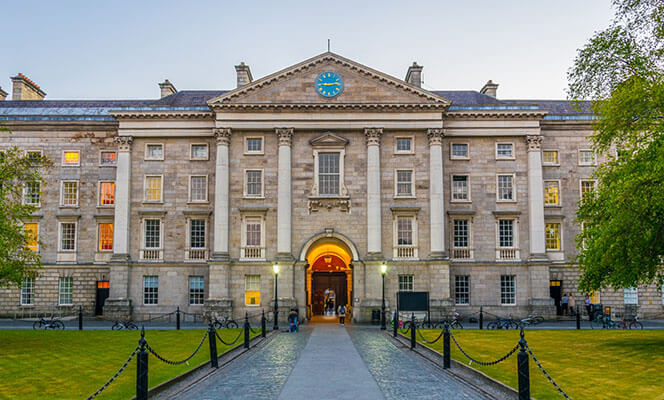
Trinity’s campus sits directly in central Dublin, with historic cobblestone quadrangles surrounded by the modern energy of Ireland’s capital city. Students get direct access to Dublin’s culture, music, and social scene throughout the year.
Housing includes limited on campus accommodation, with most students finding private housing nearby, particularly given Dublin’s significant housing demand in recent years. Trinity has a genuinely international student body, including a growing African student community.
Ireland’s climate stays mild but often rainy throughout the year, without the extreme cold found in much of continental Europe or North America. This marks a moderate adjustment for students coming from Kenya’s warmer climate.
What Happens After Graduation?
Trinity graduates find strong opportunities across technology, finance, law, and pharmaceuticals, given Dublin’s role as a major European base for multinational companies. Many major global companies recruit directly from Trinity’s talent pool.
Ireland offers a genuinely generous post study work visa, allowing international graduates to stay and work for up to two years after completing their degree, depending on their qualification level. This gives real time to build European work experience directly after your studies end.
Advice for Kenyan Students
Keep these points in mind if you plan to apply from Kenya.
Research Trinity’s international scholarships early, since several options exist specifically for high achieving international applicants.
Trinity evaluates your KCSE results against its own specific entry requirements, so confirm the exact grade equivalencies for your intended program before applying.
Budget honestly for Dublin’s rising cost of living, which has increased significantly in recent years, particularly for accommodation.
Research Ireland’s post study work visa system if gaining European work experience after graduation is part of your plan, since this pathway remains genuinely accessible compared to some other countries.
Conclusion
Trinity College Dublin admissions offer access to Ireland’s oldest and most prestigious university, set directly in a growing European technology and business hub. Its genuine post study work opportunities and strong scholarship options make it a compelling choice worth serious research. Look closely at Dublin’s cost of living before committing, confirm your specific program’s grade requirements early, and research Ireland’s post study work visa system if long term European career building interests you.
Frequently Asked Questions
Is Trinity College Dublin the top university in Ireland? Yes. Trinity consistently ranks as Ireland’s top university and appears regularly among the best universities globally.
Does Trinity require the SAT or ACT? No. Trinity evaluates applicants based on their national qualifications, including KCSE results for Kenyan students, alongside its own specific entry requirements.
Is Dublin expensive to live in as a student? Yes, increasingly so. Dublin’s cost of living, particularly accommodation, has risen significantly in recent years, so budget carefully beyond tuition itself.
Can international graduates work in Ireland after finishing at Trinity? Yes. Ireland’s post study work visa allows many international graduates to stay and work for up to two years after completing their degree, depending on their qualification level.
Check or Visit the school official website: Trinity College Dublin Admissions
Want to compare Trinity with other top European universities? Browse our other Universities guides, or check Scholarships for more funding options.
Leave a Reply