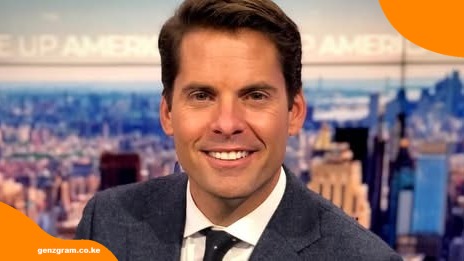
American television host Rob Finnerty has apologised to Kenyans following a wave of online criticism over his remarks comparing conditions in New York City to those in Nairobi.
Finnerty, a presenter on the conservative American news network Newsmax, faced backlash after making the comparison during a discussion about immigration in the United States. His comments sparked debate among Kenyans, many of whom felt the country’s capital had been unfairly portrayed as a symbol of urban disorder.
In an apology shared on social media on Tuesday, October 13, 2026, Finnerty acknowledged the criticism and expressed regret to people who felt offended by his remarks.
“I want to offer an apology to the people of Nairobi, Kenya,” he wrote, adding that he recognised the passion people have for their city and homeland. He also admitted that he had misspoken.
The apology followed an earlier message on October 12 in which he said he had heard the criticism and apologised.
What Did Rob Finnerty Say About Nairobi?
The controversy began during a Newsmax broadcast discussing immigration policies under former United States President Joe Biden.
During the discussion, Finnerty argued that immigration from developing countries had changed the character of some American cities.
“They move to blue sanctuary cities, and the cities then start to look more like Nairobi than New York City,” he said.
The comment quickly drew attention online, with Kenyans questioning why Nairobi had been invoked as a negative comparison in a discussion about American urban conditions.
Some critics also pointed out that the people interviewed in the segment identified themselves as coming from countries including Guatemala, Bangladesh, Burkina Faso, Senegal, Mexico and Guinea. None of those individuals identified themselves as being from Kenya or Nairobi, according to reporting by K24 Digital.
The issue therefore extended beyond the comparison itself, with critics questioning the assumptions behind using an African capital to describe what they considered undesirable changes in a major American city.
Kenyans React to the Comparison
The remarks prompted criticism from Kenyan social media users, with many defending Nairobi’s reputation and challenging the portrayal of the city.
For some, the comparison reinforced stereotypes about African cities. Others argued that international commentators should be careful when using entire countries or cities as shorthand for social problems.
The reaction also highlighted how quickly comments made on American television can generate debate thousands of kilometres away, particularly when they touch on national identity and perceptions of Africa.
However, reactions to the controversy should not be mistaken for a single, unanimous Kenyan position. Social media responses reflect the views of participating users rather than every Kenyan’s opinion.
Finnerty Responds to the Backlash
Finnerty’s apology acknowledged the offence caused by his comments. His statement recognised the attachment people have to Nairobi and Kenya and expressed regret to those he had offended.
While the apology addressed the reaction to his remarks, it did not by itself resolve the wider debate about how African cities are represented in international media.
The incident also illustrates the difference between criticising specific urban challenges and using a city as a broad negative comparison. Like other major cities, Nairobi faces questions about infrastructure, housing, sanitation, traffic and public services. Those challenges can be discussed without reducing the city to a stereotype.
The Bigger Question: How Is Africa Portrayed in International Media?
The controversy has revived a familiar question about how African countries and cities are represented in global news and political debates.
When African locations are used as negative comparisons, audiences may interpret the language as reflecting broader assumptions about the continent rather than an evidence-based assessment of a particular urban issue.
At the same time, meaningful discussions about cities should rely on specific evidence, including infrastructure, public services, living conditions and governance, instead of sweeping comparisons.
Finnerty’s apology may ease some of the immediate criticism, but the episode demonstrates how a brief television remark can trigger an international conversation about language, stereotypes and national image.
For Nairobi residents and Kenyans following the debate, the central issue is not whether the capital has challenges. It is whether those challenges are described fairly and accurately, without turning the city into a caricature.
Follow Our WhatsApp Channel for Daily Real-Time News Updates