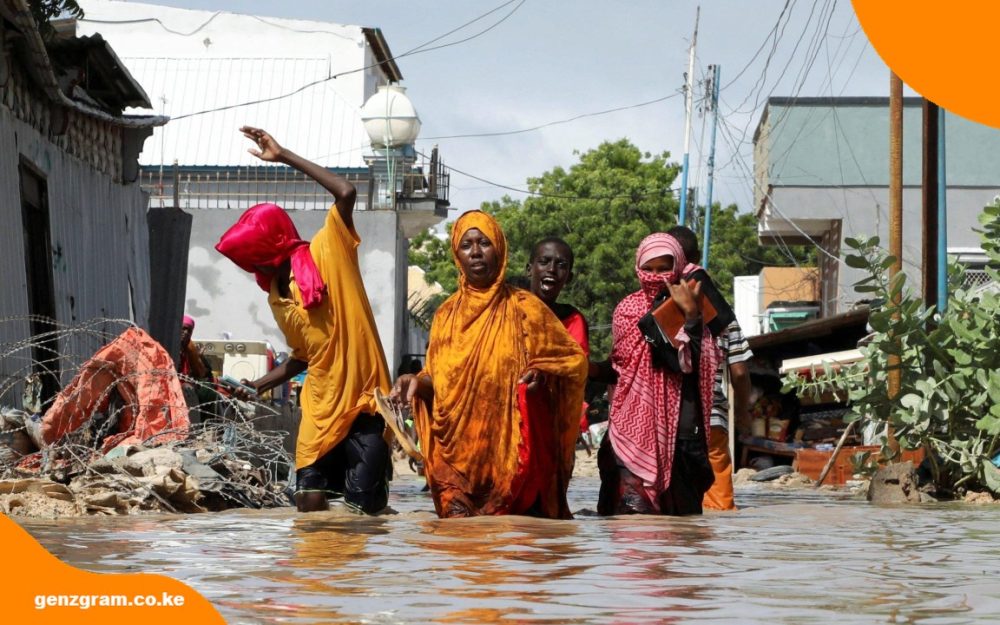
Heavy rains have triggered flooding in parts of Mogadishu, Somalia’s capital, disrupting movement along city streets as residents navigate waterlogged roads and authorities face growing concerns over the impact of the ongoing rainy season.
Photographs captured in Mogadishu on Monday, October 12, 2026, showed motorists and motorcyclists attempting to move through flooded streets following heavy rainfall. The scenes highlight the vulnerability of urban areas to intense downpours, particularly where drainage systems struggle to carry away accumulated rainwater.
The flooding comes at a time when Somalia is facing warnings of potentially severe rainfall associated with a strengthening El Niño weather pattern. Humanitarian agencies have cautioned that the coming months could bring additional flooding, displacement and food insecurity across several parts of the country.
Flooded streets disrupt movement in Mogadishu
Mogadishu, a coastal city along the Indian Ocean, is among the urban centres exposed to the effects of intense seasonal rainfall.
The latest photographs from the capital show vehicles and motorcycles moving through standing floodwater, illustrating the difficulties residents can face when heavy rain overwhelms urban drainage.
Flooded roads can slow transport, make some routes difficult to pass and disrupt access to workplaces, markets, schools and essential services. Waterlogged streets can also pose safety risks to pedestrians and motorists, particularly where the depth of the water or the condition of the road surface is difficult to judge.
However, the full extent of the latest flooding, including the number of affected households and any damage to property, has not been independently established in the reports available at the time of publication.
The situation has renewed attention on the need for effective drainage, early-warning systems and rapid emergency responses as Somalia enters one of its main rainy seasons.
El Niño raises concerns about further flooding
The flooding in Mogadishu is occurring against the backdrop of warnings about a potentially unusually wet rainy season across Somalia.
In September, the Food and Agriculture Organization of the United Nations (FAO) warned that strengthening El Niño conditions and forecasts of above-normal rainfall could significantly increase the risk of flooding during the October-to-December Deyr rainy season.
According to the FAO, some areas of central and southern Somalia have a probability of above-normal seasonal rainfall reaching 90 per cent.
The agency has pointed to similarities between the developing weather conditions and those experienced during the devastating floods of 1997 and 2023. It has nevertheless cautioned that these historical comparisons do not mean the same scale of disaster is certain to occur in 2026.
El Niño is a natural climate phenomenon involving warmer-than-average sea-surface temperatures in the central and eastern tropical Pacific Ocean. It can influence rainfall patterns in different parts of the world, including the Horn of Africa.
When intense rainfall occurs over a short period, urban drainage systems may be unable to remove water quickly enough. In rural and riverine areas, sustained rainfall can raise river levels, flood agricultural land and threaten communities living close to riverbanks.
Health services and vulnerable communities face risks
Flooding can create problems beyond the immediate disruption to transport.
Standing water and damaged sanitation systems can increase the risk of contamination of drinking-water sources. When floodwater mixes with sewage or waste, residents may face greater exposure to waterborne diseases.
Health facilities may also struggle to operate when roads become impassable or their premises are affected by floodwater.
The International Rescue Committee reported in September that heavy rainfall had affected the Ariif Health Centre in Mogadishu, prompting its teams to assess the damage and the facility’s ability to continue providing essential services. The organisation warned that further rainfall could place additional pressure on an already stretched health system.
Children, older people, people with disabilities and low-income households may be particularly vulnerable when flooding damages homes, interrupts transport or limits access to food, clean water and medical care.
For households already experiencing financial hardship, even temporary flooding can create additional expenses through damaged belongings, lost working hours and the need to find alternative accommodation.
River flooding adds to Somalia’s wider concerns
The threat is not limited to Mogadishu.
Somalia’s Juba and Shabelle river basins are also being closely monitored because rainfall in the Ethiopian highlands can contribute to rising river levels downstream, even when rainfall in some Somali locations is limited.
A report published by Hiiraan Online on October 10 said the Shabelle River at Jowhar had risen to 4.70 metres, approaching the moderate flood-risk threshold of five metres identified in the monitoring report. The increase underscored the importance of monitoring river levels alongside local weather conditions.
The consequences of major river flooding can be severe for farming communities. Floodwaters may destroy crops, kill livestock, damage roads and interrupt access to markets, potentially worsening food shortages in areas where families depend on agriculture and pastoralism.
The International Committee of the Red Cross warned on October 13 that millions of people in Somalia could face further hardship as the risk of El Niño-related flooding increases. The organisation highlighted the difficult choices facing farmers who must decide whether to plant crops despite the danger of losing them to floodwaters.
Calls for preparedness as the rains continue
The developing situation has placed greater emphasis on preparedness by government agencies, local authorities and humanitarian organisations.
Measures such as clearing drainage channels, monitoring rainfall and river levels, identifying safe evacuation areas and positioning emergency supplies can help reduce the effects of flooding.
Residents in flood-prone locations are also encouraged to follow official weather alerts, avoid walking or driving through fast-moving floodwater and seek safer ground when authorities issue evacuation instructions.
Although rainfall can replenish water supplies, support pasture growth and benefit agricultural production, excessive rainfall can quickly become destructive when communities lack adequate protection and response capacity.
For Mogadishu, the immediate concern is the disruption caused by waterlogged streets. For Somalia as a whole, the broader challenge is preparing for a rainy season that could intensify existing humanitarian needs.
As October progresses, the scale of the impact will depend on how rainfall develops, how river levels change and how effectively authorities and humanitarian partners respond to emerging risks
Follow Our WhatsApp Channel for Daily Real-Time News Updates.