

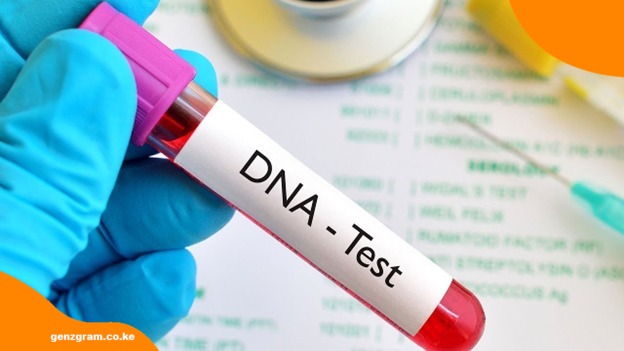
Questions about biological relationships can be difficult to discuss, especially when a parent wants certainty about a child’s paternity. For some families, a DNA test provides answers that can help resolve doubts, while for others, it may be necessary for legal matters such as child maintenance, inheritance or establishing parentage.
In Kenya, DNA testing services are available through specialised laboratories, including the Kenya Medical Research Institute (KEMRI) and the Bioinformatics Institute of Kenya (KIBS).
But how much does a DNA test cost in Kenya? How is the test conducted, how long does it take to get the results, and can the results be used in court?
Here is what you need to know before booking a test.
How much does a DNA test cost in Kenya?
The cost of a DNA test depends on the type of test, the laboratory selected, the number of people being tested and whether the results are intended for personal knowledge or legal use.
For people seeking to establish whether a man is the biological father of a child, published prices from two Kenyan providers offer a useful guide.
According to its official website, KEMRI charges KSh 27,000 for a standard paternity test. The institution also offers home DNA testing for people who want to establish paternity for personal knowledge.
The Bioinformatics Institute of Kenya publishes a price of KSh 30,000 for a standard 24-marker test involving an alleged father and one child. Its 46-marker test costs KSh 40,000 for the same two participants.
These prices are published by the respective laboratories and may change. Customers should confirm the total cost before making payment.
| DNA testing provider | Published price | Test details
| KEMRI | KSh 27,000 | Standard paternity test
| KIBS | KSh 30,00 | 24-marker test for alleged father and child
| KIBS | KSh 40,000 | 46-marker test for alleged father and child
Sources: KEMRI DNA services and KIBS DNA testing services
It is important to compare like-for-like services. A quoted price may cover a particular test and number of participants, while legal documentation, sample collection arrangements or additional family members may affect the final amount.
What is a DNA paternity test?
A DNA paternity test is a scientific procedure used to determine whether a particular man is the biological father of a child.
A child inherits approximately half of their DNA from their biological mother and half from their biological father. By analysing specific genetic markers in the samples provided, laboratory scientists can assess whether the genetic evidence supports or excludes the alleged father as the child’s biological parent.
The process is commonly used when parents want to establish biological relationships. It can also be relevant in legal proceedings where paternity must be established.
A properly conducted test can provide a high level of certainty. However, customers should ask the laboratory how it reports its findings and what the results mean in their particular circumstances.
How is a DNA test conducted?
For a standard paternity test, samples are generally collected from the child and the alleged father. A mother’s sample may also be included because it can help the laboratory interpret the genetic evidence.
One common collection method involves using a sterile swab to collect cells from inside the mouth. The procedure is usually straightforward and does not require a blood sample.
The laboratory then analyses the samples and compares the relevant genetic markers.
The process generally follows these steps:
1. Contact a laboratory: Explain whether you need a private paternity test or one intended for court proceedings.
2. Confirm the requirements and price: Ask how many participants are required, what documents you need and whether the quoted fee covers everything.
3. Provide the samples: Follow the laboratory’s instructions for sample collection and identification.
4. Laboratory analysis: Scientists examine the genetic information and assess the relationship.
5. Receive the report: The laboratory provides the findings through its specified reporting procedure.
KEMRI states that its DNA testing results are typically processed within five to ten working days. Other laboratories may have different turnaround times, so it is advisable to confirm the expected waiting period when arranging the test.
Private DNA test versus legal DNA test
One of the most important decisions to make before testing is whether the results are required for personal knowledge or for an official legal process.
A private DNA test is intended to answer a personal question. Depending on the provider, participants may collect samples using a home testing kit and send them to the laboratory for analysis.
This option may be convenient for people who want to establish a biological relationship without attending a laboratory in person.
However, a home test may not be accepted as evidence in court because the laboratory may not independently verify the identity of the people who provided the samples.
A legal DNA test follows a more controlled process. Participants attend an approved collection arrangement, their identities are verified and the handling of samples is documented through a chain-of-custody procedure.
KIBS states that legal testing requires participants to attend the laboratory for sample collection and that identity documents are required. It also lists an additional KSh 3,000 charge for notarisation of the report by an advocate.
Anyone seeking a test for child maintenance, inheritance or another court matter should first establish the requirements of the relevant court or authority. It is better to arrange the correct procedure from the beginning than to pay for a private test that may not meet the required evidential standards.
Where can you get a DNA test in Kenya?
1. Kenya Medical Research Institute (KEMRI)
KEMRI’s Human DNA Identification Laboratory offers paternity testing and other relationship-testing services.
Its published standard paternity testing price is KSh 27,000.
The laboratory is located at KEMRI headquarters on Raila Odinga Way in Nairobi.
For enquiries, customers can call 0112 693 020 or email hidinfo@kemri.go.ke.
2. Bioinformatics Institute of Kenya (KIBS)
KIBS also offers DNA paternity testing and other family relationship tests.
Its website lists a standard 24-marker paternity test at KSh 30,000 for an alleged father and one child, and a 46-marker test at KSh 40,000 for the same two participants.
The institute is located at Kenbelt Business Park on Old Mombasa Road in Nairobi.
For enquiries, customers can call 0734 972 158 or visit its website.
Before travelling to either facility, contact the provider to confirm its current prices, operating hours, documents required and whether an appointment is necessary.
Can a DNA test be done without the mother?
Yes. A paternity test can be conducted using samples from the alleged father and the child without the mother’s participation.
KEMRI explains that a motherless paternity test can be performed, although additional analysis may be needed in some circumstances. The mother’s sample can help scientists interpret unexpected findings and strengthen the analysis.
If the alleged father is unavailable, other options may include testing close biological relatives, such as paternal grandparents or a biological sibling of the alleged father. These tests are different from a direct paternity test and may require additional participants or more extensive analysis.
The laboratory should assess the circumstances and recommend an appropriate method rather than assuming that every family relationship can be established using the same test.
What should you consider before paying for a DNA test?
DNA testing involves sensitive personal and family information. Before proceeding, consider the following:
– Purpose: Decide whether the test is for personal knowledge or official legal use.
– Total cost: Confirm the price for all participants and ask about additional charges.
– Confidentiality: Understand how the laboratory stores, shares and protects your genetic information.
– Consent: Ask about the consent requirements, particularly when a child is involved.
– Results: Confirm how the report will be delivered and how long it is expected to take.
– Sample handling: For legal testing, ensure the collection and documentation process meets the applicable requirements.
It is also worth considering the emotional implications of the results. A DNA report can answer a biological question, but the consequences may affect relationships within a family. Where conflict is likely, professional counselling or appropriate legal guidance may help families navigate the outcome.
Generally,
The cost of a DNA paternity test in Kenya starts at around KSh 27,000 at KEMRI for its published standard test, while KIBS lists prices of KSh 30,000 for a 24-marker father-and-child test and KSh 40,000 for its 46-marker option.
The right choice depends on your budget, the purpose of the test and the type of evidence you require.
Before paying, contact the laboratory directly to confirm the latest price and requirements. If the results are intended for a court case, make that clear from the beginning so the test can be arranged using the appropriate legal procedures.