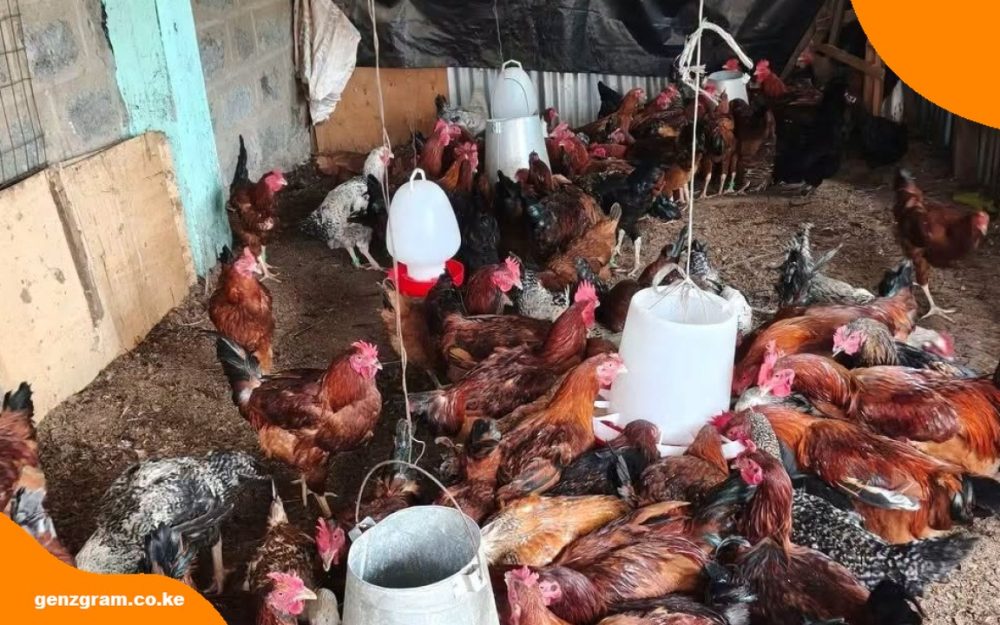
As more Kenyans look for alternative sources of income, improved kienyeji chicken farming is emerging as an attractive agribusiness opportunity for small-scale farmers, young entrepreneurs, and households seeking to diversify their earnings.
Unlike traditional village chickens, which often take longer to mature and may produce fewer eggs under ordinary management, improved indigenous chicken varieties have been selected for better productivity. Depending on the breed and management system, farmers can raise them for meat, eggs, or both.
For a country where poultry products are consumed in homes, hotels, restaurants, and other food businesses, improved kienyeji farming offers an opportunity to turn a familiar household activity into a more organized commercial enterprise.
But what makes this type of poultry farming worth considering, and what should prospective farmers know before investing?
1. Faster Growth Can Mean Earlier Sales
One of the major attractions of improved kienyeji chicken is their potential to reach market size sooner than traditional village birds.
Some improved varieties can approach market readiness in approximately four to five months under suitable feeding and management conditions, although actual performance depends on genetics, nutrition, health, and the target market.
This can allow farmers to plan production cycles more efficiently and begin selling birds earlier than they might with slower-growing local chickens.
For a small-scale farmer, shorter production cycles can improve cash flow, provided the selling price covers the cost of chicks, feed, medication, housing, labor, and other expenses.
The important point is that faster growth does not automatically guarantee profit. Farmers need to monitor weight gain, mortality, and production costs to establish whether their flock is performing as expected.
2. One Enterprise Can Produce Both Meat and Eggs
Improved kienyeji chickens are commonly described as dual-purpose birds because suitable varieties can produce both meat and eggs.
This gives farmers flexibility in deciding how to earn income from their flock.
Male birds can be raised for meat, while hens can be retained for egg production and breeding where appropriate. Farmers may also sell live birds to households, traders, hotels, and restaurants.
The ability to generate income from different products can help spread market risk. If demand for one product weakens temporarily, a farmer may have another product to sell, depending on the age and composition of the flock.
However, meat production and egg production require different management decisions. Farmers should choose their breed, feeding program, and production system according to their primary business objective.
3. Growing Demand Creates Market Opportunities
Kienyeji chicken and eggs have an established place in Kenyan food culture. They are purchased for family meals, celebrations, and hospitality businesses, while some consumers specifically seek indigenous-type poultry products.
This creates potential markets for farmers who can supply healthy birds and quality eggs consistently.
In Busia and other parts of western Kenya, farmers can explore sales to local households, market traders, hotels, restaurants, butcheries, and customers ordering directly from farms.
A farmer with a reliable supply may also build relationships with repeat customers instead of depending entirely on occasional sales at the local market.
Nevertheless, demand and prices vary by location, season, bird size, and customer preference. Before starting, it is advisable to visit potential buyers, establish their preferred bird weights and quantities, and compare local prices.
A market survey conducted before purchasing chicks can prevent a situation where birds are ready for sale but the farmer has no reliable buyers.
4. You Do Not Need a Large Piece of Land
Another advantage of poultry farming is that it can be established on a relatively small plot compared with enterprises such as cattle or large-scale crop production.
A farmer can begin with a manageable flock and expand gradually as experience, capital, and market access improve.
A well-designed poultry house should provide adequate space, ventilation, protection from predators and weather, and easy access to feeders and drinkers.
Depending on the production system, farmers can also provide a secure outdoor area where birds can forage.
However, small land requirements should not be confused with low management requirements. Birds kept in confined spaces still need balanced feed, clean water, sanitation, and careful monitoring.
The Kenya Agricultural and Livestock Research Organization (KALRO) identifies housing, feeding, disease prevention, and biosecurity as important elements of successful poultry production.
5. Improved Breeds Offer Better Production Potential
The development of improved indigenous chicken varieties has created more options for Kenyan poultry farmers.
In July 2026, The Star reported on KALRO’s KC1, KC2, and KC3 breeds, which were developed as dual-purpose birds suited to different production systems.
The improved varieties aim to combine useful indigenous characteristics with better productivity. Their potential performance, however, depends on proper nutrition, housing, health management, and the suitability of the chosen breed for the farmer’s intended market.
Farmers should therefore purchase chicks from reputable hatcheries or recognized breeding programs and confirm the breed’s expected performance before investing.
They should also avoid assuming that all birds sold under the name “improved kienyeji” have identical characteristics. Growth rates, egg production, and management needs can vary significantly between breeds and suppliers.
Read more through KALRO’s poultry research and training resources.
6. It Can Create Employment and Additional Business Opportunities
Improved kienyeji farming can generate more than income from selling mature birds.
As production expands, opportunities may emerge in chick brooding, feed supply, egg distribution, poultry transport, vaccination services, hatchery operations, and marketing.
Young people can also explore value addition by supplying dressed chicken, cleaned and packaged eggs, or regular poultry deliveries to businesses, subject to applicable food-safety requirements.
Farmers who gain experience may eventually offer training or supply services to other poultry keepers.
A 2024 study on improved indigenous chicken production in Kenya identified opportunities across the value chain, including incubation, vaccination, feed formulation, and marketing. It also highlighted feed costs as a major constraint to farmers.
This means the business opportunity is real, but so is the need for planning.
7. Poultry Manure Can Support Crop Farming
For farmers who also grow crops, poultry manure can provide an additional benefit.
When properly handled and composted, poultry manure can supply nutrients and organic matter to agricultural soils. This may reduce dependence on some purchased soil amendments, depending on the crop, soil conditions, and nutrient requirements.
Farmers should avoid applying fresh manure carelessly, particularly close to harvest or where runoff could contaminate water sources.
Proper storage, composting, and application rates are important to reduce sanitation risks and minimize nutrient losses.
Integrating poultry and crop production can therefore improve resource use, especially on farms where both enterprises are managed carefully.
8. The Biggest Challenge Is the Cost of Feed
Despite its potential, improved kienyeji chicken farming is not a guaranteed route to quick wealth.
Feed is one of the largest expenses in poultry production. A farmer who buys chicks cheaply but fails to budget for adequate nutrition may experience slow growth, poor egg production, and higher mortality.
A 2024 study published in the East African Agricultural and Forestry Journal identified feed costs among the major constraints facing improved indigenous chicken farmers in Kenya.
Farmers should prepare a realistic budget covering feed, chicks, housing, equipment, vaccines, veterinary services, water, transport, and labor.
They should also keep records of purchases, mortality, growth, egg production, and sales. These records help determine the actual cost of producing each bird or egg.
Other important risks include Newcastle disease and other poultry infections, predators, poor-quality chicks, unreliable markets, and fluctuations in selling prices.
A vaccination program developed with veterinary or livestock-extension guidance, strict biosecurity, clean housing, and appropriate nutrition can help reduce avoidable losses.
9. How to Start Without Taking Excessive Risks
For beginners, starting with a manageable flock can be wiser than investing heavily before understanding the business.
A practical approach is to:
- Identify potential customers and determine which birds or eggs they prefer.
- Choose a reputable supplier and verify the breed.
- Construct suitable housing before bringing in chicks.
- Prepare a feeding, vaccination, and biosecurity plan with qualified guidance.
- Keep production and financial records from the first day.
- Review the first production cycle before expanding.
Farmers should also investigate the availability of reliable chick suppliers in their area. Shortages or delays can affect production schedules and market commitments.
For additional practical guidance, consult KALRO’s chicken-farming training course.
Is Improved Kienyeji Farming a Good Agribusiness Idea?
Improved kienyeji chicken farming offers Kenyan farmers an opportunity to produce meat and eggs, generate household income and develop businesses without necessarily requiring extensive land.
Its strongest advantages include the potential for faster growth, dual-purpose production, flexible farm sizes and opportunities across the poultry value chain.
However, profitability depends on more than the breed. Feed costs, disease prevention, chick quality, management skills and access to buyers can determine whether a poultry enterprise succeeds or struggles.
The best approach is to treat improved kienyeji farming as a business, not simply a way of keeping chickens. Farmers who plan their budgets, understand their markets and manage their flocks carefully will be better positioned to benefit from the opportunity.
For aspiring poultry entrepreneurs, the question is not merely how many chickens they can rear, but how efficiently they can turn healthy birds and quality eggs into sustainable income.