The Ministry of Education has directed schools to turn down visits by politicians and other well-wishers giving donations in school to avoid derailing learning and exposing learners to political propaganda ahead of the 2027 General Election.
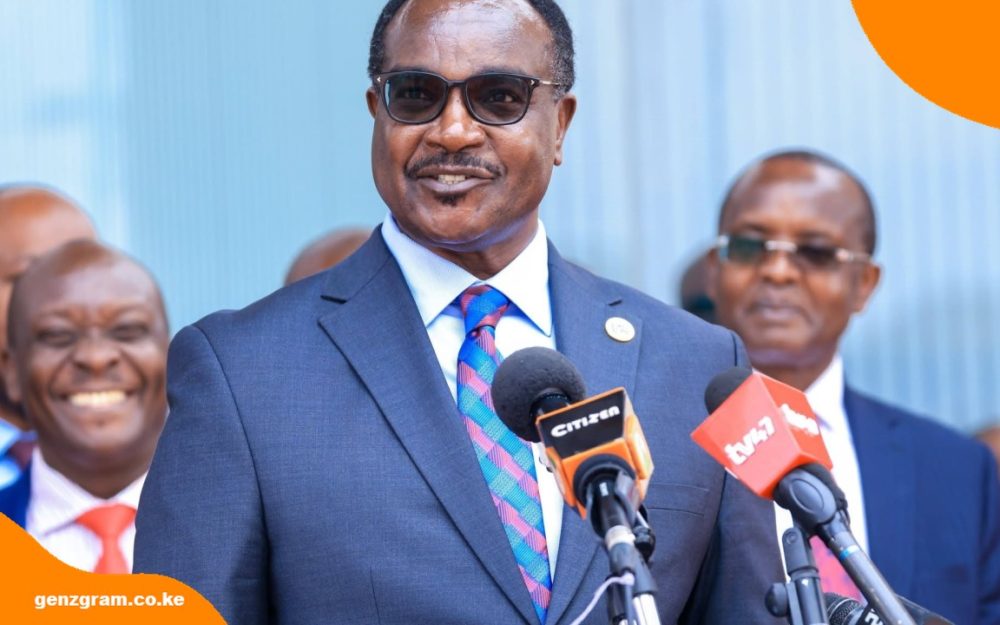
Education Cabinet Secretary Prof. Julius Ogamba says some people have been using donations to vie for positions by giving handouts to schools.
Political campaigns are heating up as the 2027 General Election draws near, with many politicians seeking to leverage the next elections to propel their political careers.
According to the reports published on October 10, Daily Nation, and Education News on October 11, the ministry is asking that donations be through proper administrative channels without involving learners or disrupting school programs.
The ministry raises an alarm on bread and soda donations.
Recently, the ministry has been disturbed by reports that politicians and well-wishers have been visiting schools with small donations of bread and soda, taking pictures and videos with learners, and then sharing them on social media for their propaganda.
Education officials say such donations distract learners and disrupt school programs.
They also complain that the pictures and videos with minors are shared on social media to boost the profiles of those who gave.
Ogamba said school donations give people an opportunity to advance selfish interests in politics and other areas.
“The ministry is strongly against donations to institutions of learning that give an opportunity to use learners to further selfish interests,” he said.
The concerns were raised by the county administration in a letter from the Nyamira County Director of Education, Joshua Kaga, to all school heads dated October 5, 2026.
The note said the visitors should not disrupt school programs by taking pictures and videos with learners just because they gave donations to the schools.
The ministry is now reminding all county education departments that the guidance note is applicable in all regions, as donations are a sensitive issue.
Why the government is discouraging school visits by politicians.
The main reason why the government is discouraging school visits by politicians is to protect learners from propaganda and ensure there is no disruption of learning programs.
With the 2027 General Election approaching, the authorities are concerned that politicians will use school visits to woo voters by campaigning in institutions of learning.
Education officials are also afraid that voters will use pictures and videos of learners for their propaganda without understanding the implications of sharing the content on social media.
Education officials say school administrators should not allow visitors to disrupt learning programs.
Accordingly, the ministry is asking school heads to ensure that donations are administered by the respective schools’ administration and not through pictures and videos of learners.
Children’s privacy is at the center of the complaint
The concern with donations is that they disrupt learning and that pictures and videos of learners are shared on social media.
According to the Children Act, 2022, every child has the right to be free from arbitrary or unlawful interference with the privacy, family or private affairs, correspondence, honor, and reputation.
The Data Protection Act also offers protection for personal data, including pictures and videos of learners.
The two pieces of legislation are applicable when photographs or videos of children are captured, shared, or used to sell products or advance political interests.
Accordingly, the ministry is asking school administrations to protect the privacy of learners and ensure that donations do not interfere with learning programs.
Will schools stop receiving donations?
The concerns raised by the ministry do not mean that schools will stop receiving donations.
The reports suggest that the administration wants to discourage unnecessary visits by politicians to schools.
Therefore, schools should request donations on their behalf through the appropriate administrative channels.
Unless the donations are in the form of money or valuable items, political parties, politicians, and well-wishers should contact the school administration and ask how they can help with specific offerings like food and other necessities.
This way, the schools can receive assistance while protecting the privacy of the learners and avoiding disruption of learning programs.
This is the main reason why the ministry sent the reminder note to education departments in all counties.
The directive raises questions about inequality as residents argue that politicians have been supporting learners by giving donations.
Some residents complained that the ministry was picking on politicians for making donations to schools shortly before the elections.
Others argued that the restrictions applied selectively since politicians from different parties are involved in donating to schools.
It is a valid observation, but it should not overshadow the concerns raised by the ministry on donations to schools.
The officials remind residents that politicians should not use donations to advance their careers.
They should respect the rights of learners and ensure that school programs are not disrupted when making the offerings.
What happens now?
School heads and principals should contact local authorities to remind visitors that donations should go through the appropriate channels without disrupting learning programs.
Politicians who intend to donate to schools before the 2027 General Election should consider the recommendations and avoid disrupting learning programs by interacting with learners.
Ultimately, the issue is about protecting children’s privacy and ensuring that donations do not interfere with their studies.
Follow Our WhatsApp Channel for Daily Real-Time News Updates