

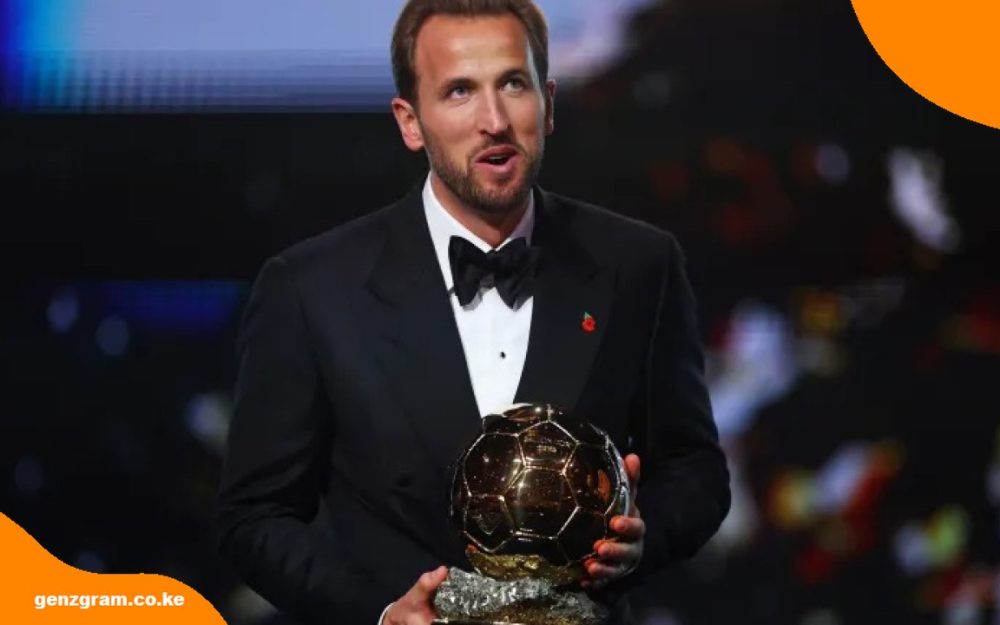
For years, Harry Kane has been described as one of the most reliable goalscorers in modern football. He has broken records, delivered remarkable individual performances and established himself among the leading forwards of his generation. Yet one question repeatedly followed him: would he ever win football’s most prestigious individual award?
That question has now been answered. Kane won the 2026 Men’s Ballon d’Or at a ceremony held at the London Palladium on October 26, ending England’s 25-year wait for another male winner. The Bayern Munich and England striker finished ahead of Real Madrid’s Kylian Mbappé and Barcelona’s Lamine Yamal in the final voting. He also received the Men’s Striker of the Year award, further underlining the remarkable campaign behind his success.
The victory has triggered a wider discussion about Kane’s legacy. Is he simply enjoying the best period of his career, or has he finally earned a place in the conversation about the greatest strikers football has ever produced?
A season that made the difference
Kane’s award was built on numbers that are difficult to ignore. During the 2025/26 campaign, he scored 73 goals for Bayern Munich and England across competitions, including 61 goals for the German club. Those figures placed him among the most prolific forwards in European football history for a single season.
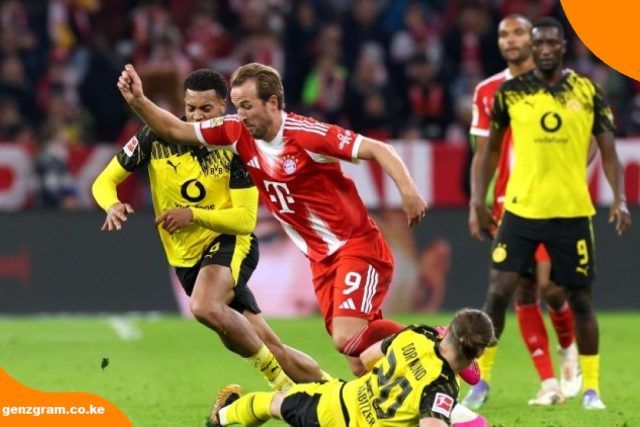
His contribution was not limited to domestic competition. Kane scored 14 goals in the UEFA Champions League as Bayern reached the semi-finals. He also helped the club secure major domestic honours, including the Bundesliga title and German Cup, while his performances for England at the 2026 FIFA World Cup added another important chapter to his season.
England finished third at the tournament, with Kane scoring six goals. The achievement gave his Ballon d’Or campaign an international dimension, demonstrating that his influence extended beyond his club performances.
According to UEFA, Kane’s 73 goals across the campaign helped him finish ahead of Mbappé and Yamal in the Ballon d’Or voting. He also finished as the Bundesliga’s leading scorer for the third consecutive season.
From loan spells to football’s biggest individual prize
Kane’s journey to the top has not followed the traditional path of a young superstar who immediately becomes a first-team regular at a major club.
Before establishing himself at Tottenham Hotspur, he experienced several loan spells, including periods at Leyton Orient, Millwall, Norwich City and Leicester City. His early career required patience, persistence and the ability to keep working despite uncertainty about where his future would lead.
Tottenham eventually became the platform on which he developed into one of the Premier League’s most recognisable forwards. He scored 280 goals in 435 appearances for the north London club, becoming its all-time leading goalscorer before leaving for Bayern Munich in 2023.
His departure from Tottenham was a major moment in his career. After years of carrying much of the club’s attacking responsibility, Kane moved to Germany in search of a new challenge and an opportunity to compete for major trophies.
At Bayern, he continued producing goals at an extraordinary rate. His first seasons in Germany strengthened his reputation as a complete centre-forward, capable of finishing chances, creating opportunities for teammates and contributing to the wider attacking structure.
His 2026 Ballon d’Or victory is therefore not simply a reward for one prolific season. It is also recognition of a career built through sustained improvement and consistent performance.
What makes Harry Kane different?
The modern striker is often judged by goals alone, but Kane offers more than finishing ability.
He is comfortable dropping into midfield, receiving the ball between defensive lines and creating opportunities for attacking teammates. His passing range allows him to act as both a goalscorer and a playmaker, making him difficult for defenders to track.
This combination has helped him remain effective in different tactical systems. He can operate as a traditional number nine, occupy defenders inside the penalty area or move deeper to help build attacks.
His ability to take penalties, score with either foot and threaten in the air adds further variety to his game. These qualities have made him a consistent source of goals for both club and country.
Kane’s style may not always be as visually explosive as that of some of his competitors. However, his effectiveness is reflected in his ability to influence matches in several ways. A striker who can score regularly while also creating chances for others offers a team a different kind of attacking advantage.
That versatility is an important part of the argument for his place among the finest forwards of his generation.
The Ballon d’Or and the all-time great debate
Winning the Ballon d’Or is a major career achievement, but it does not automatically settle debates about football greatness.
The award recognises an outstanding individual season, taking account of performances, achievements and the player’s overall contribution. Football history, however, is judged across much longer periods. Longevity, consistency, major trophies, records, influence on the game and performances in decisive matches all contribute to a player’s historical standing.
Kane now has an individual honour that places him in a distinguished group of footballers. He is also the first Englishman to win the men’s award since Michael Owen in 2001. The achievement is particularly significant because several generations of outstanding English players have competed for the prize without winning it.
Comparisons with Lionel Messi, Cristiano Ronaldo, Ronaldo Nazário, Thierry Henry, Gerd Müller and Robert Lewandowski will inevitably emerge. Each enjoyed a different career, played in different footballing environments and left a distinct mark on the game.
Kane’s supporters can point to his extraordinary scoring record, technical completeness and ability to deliver across different competitions. Critics may argue that a longer period of dominance at the very highest level, particularly in European club competition, is necessary before placing him alongside the most decorated names in football history.
Both perspectives highlight an important distinction: winning the Ballon d’Or confirms Kane’s status as the outstanding men’s player of the 2025/26 season, while his all-time legacy will continue to be shaped by what he achieves over the remainder of his career.
Where does he stand alongside the great strikers?
The striker position has produced some of football’s most celebrated players. From Gerd Müller and Ronaldo Nazário to Thierry Henry, Robert Lewandowski and Luis Suárez, the role has evolved through different generations.
Some forwards were celebrated for their movement and instinctive finishing. Others combined physical strength with exceptional technical ability, while some became famous for their creativity as much as their goals.
Kane belongs to a generation in which centre-forwards are increasingly expected to contribute to build-up play, press opponents and create space for teammates. His ability to combine those responsibilities with prolific scoring makes his profile particularly valuable.
His record at Tottenham, his continued production at Bayern and his performances for England provide substantial evidence of his quality. The Ballon d’Or adds an important individual milestone to that record.
However, comparisons with the greatest players should consider the complete body of work rather than a single season. The longevity of a career, influence on major competitions and contribution to club and international football remain relevant measures.
An important moment for English football
Kane’s victory also carries significance beyond his personal achievements. England has produced generations of celebrated footballers, including Stanley Matthews, Bobby Charlton, Kevin Keegan and Michael Owen, who won the Ballon d’Or in 1956, 1966, 1978 and 2001 respectively.
Kane is now part of that history. His success also gives English football another major individual milestone after years in which players from other countries dominated the award.
For Bayern Munich, the achievement is equally significant. Kane became the first player from the Bundesliga to win the award in three decades, following Borussia Dortmund’s Matthias Sammer in 1996. He also became the latest Bayern player to join a prestigious group that includes Gerd Müller, Franz Beckenbauer and Karl-Heinz Rummenigge.
His victory is therefore a landmark for both English football and the German club.
Has Kane finally proved he belongs among the all-time greats?
There is little doubt that Harry Kane has established himself as one of the outstanding strikers of his generation. His goalscoring consistency, technical ability, leadership and performances across different competitions make a compelling case.
The 2026 Ballon d’Or has strengthened that argument considerably. It recognises a season in which he combined extraordinary individual numbers with major team achievements and an influential international campaign.
But the all-time great debate is not a competition that ends with one trophy. It is a conversation shaped by years of excellence, memorable performances and lasting influence on football.
Kane has now reached a milestone that once seemed difficult to imagine during his early career. His next challenge will be to maintain the level that brought him this recognition and add further achievements to an already remarkable record.
For now, the question is no longer whether Harry Kane can win the Ballon d’Or. He has done that. The bigger question is where history will eventually place him among the greatest strikers the game has ever seen.
Comments
Please keep it respectful. Links, phone numbers and adverts are not allowed and will not be posted.