
President William Ruto has intensified his political messaging ahead of Kenya’s 2027 General Election, defending his administration’s development record while challenging opposition leaders to present clear policies instead of relying on calls for his removal.
With the next presidential election scheduled for August 10, 2027, the political debate is increasingly centred on the economy, taxation, youth employment, the cost of living and whether opposition leaders can agree on a common strategy.
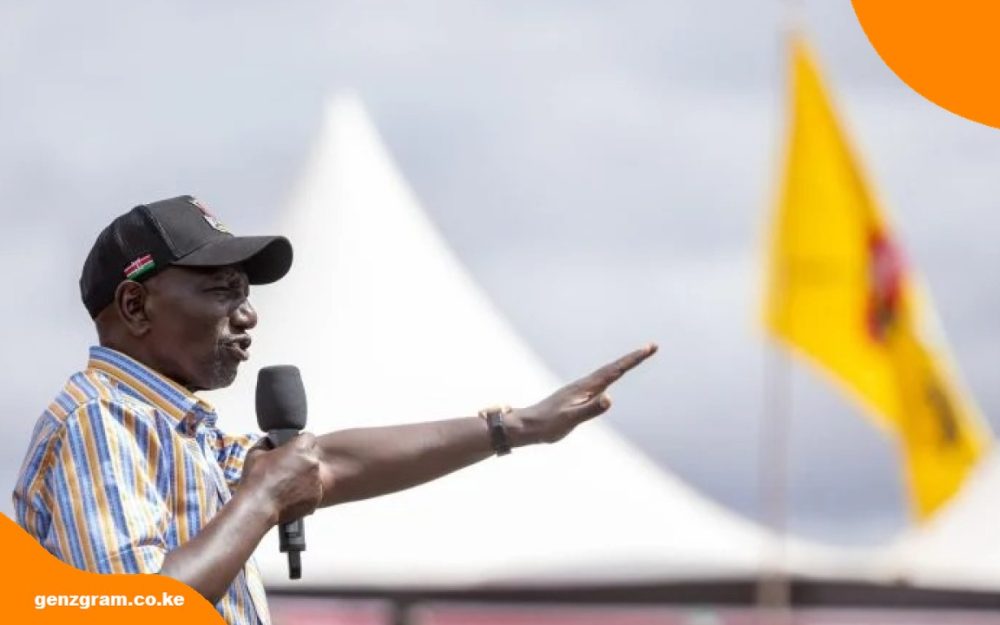
Ruto’s latest remarks during the Mashujaa Day celebrations in Eldoret on October 20 placed his administration’s record at the centre of the coming contest. He argued that candidates should be judged by their track records, visions, plans and ability to deliver results.
The President’s message comes as political rivals seek to challenge his re-election bid and voters demand clearer answers about the country’s economic direction.
Ruto turns development promises into a campaign argument
One of Ruto’s main political strategies is to present the 2027 election as a choice between continuing his administration’s economic programme and changing direction under a different government.
During his recent public engagements, he has defended the Bottom-Up Economic Transformation Agenda, pointing to government initiatives in agriculture, housing, infrastructure and access to credit.
He has also challenged opposition politicians to explain what they would do differently and how their proposed policies would improve the lives of ordinary Kenyans.
In an October 17 address in Eldoret, Ruto urged his critics to move beyond the “Must Go” slogan and offer policy alternatives. The remarks reflected his attempt to shift the debate from demands for political change to questions about governance and delivery.
However, defending a record also exposes an administration to scrutiny. Voters can compare promises made during the 2022 election with the results they have experienced in their households, workplaces and businesses.
For Ruto, the challenge is therefore not only to communicate his achievements but also to demonstrate measurable progress on issues that continue to concern Kenyans.
Fresh promises on taxes, jobs and farmers
The President’s October 20 address included new commitments that could become important in the months leading to the election.
According to The Star, Ruto announced plans for the National Treasury to submit proposals seeking changes that include PAYE tax relief, the removal of stamp duty and the removal of duty on mobile phones. The proposals would require the relevant legislative and regulatory processes before taking effect.
He also announced a Sh65-per-litre milk payout, an additional quarterly bonus of Sh2 per litre for farmers, a proposed Sh5 billion injection into the Hustler Fund and plans to expand the national youth internship programme by another 50,000 places from January 2027.
These announcements touch on issues with direct consequences for households, small businesses, young jobseekers and agricultural producers.
The central question is whether the commitments will be implemented as announced, how they will be financed and how quickly Kenyans will experience the benefits.
For example, a proposed tax change is not the same as an enacted law. Similarly, an announced employment programme must be assessed by the number of opportunities actually created, the people reached and the conditions attached to those opportunities.
As the election approaches, the implementation of these commitments is likely to attract as much attention as the announcements themselves.
Opposition unity remains a major question
While Ruto is building his re-election argument around his administration’s record, the opposition faces a different challenge: determining how to organise its political forces and select a presidential candidate.
Among the prominent figures associated with the opposition debate are Democracy for the Citizens Party leader Rigathi Gachagua, Wiper leader Kalonzo Musyoka, Nairobi Senator Edwin Sifuna and former Cabinet Secretary Fred Matiang’i.
Their political ambitions and differing approaches have kept the question of a united opposition at the centre of public discussion.
A common candidate could help opposition parties coordinate their campaigns, but agreeing on that candidate may require difficult negotiations over party interests, regional support, leadership roles and policy priorities.
The opposition must also explain what a change of government would mean in practical terms. Voters will want to know how alternative proposals would address taxation, healthcare, corruption, unemployment and the cost of living.
Without a coherent programme and a workable coalition arrangement, opposition leaders risk spending valuable campaign time competing with one another rather than explaining their plans to the electorate.
What do recent opinion polls say?
An October 4 report by Daily Nation, citing a Politrack Africa survey, placed Ruto at 45.1 per cent and Sifuna at 19.6 per cent in its reported presidential preference findings. The survey also highlighted the fragmented opposition landscape and differences in political support across regions.
Politrack reported that its survey involved 20,419 respondents, with a stated margin of error of plus or minus three percentage points. These figures represent one survey at a particular time, not the final outcome of the 2027 election.
Opinion polls can provide a snapshot of political preferences, but their findings may change as candidates emerge, coalitions form and voters assess the performance of the government.
The poll also cannot establish what would happen if opposition figures united behind a single candidate. That would be a different political scenario requiring its own evidence.
Consequently, the figures are best understood as an indication of the debate at the time of the survey rather than a prediction of the final result.
The issues that could shape the 2027 vote
Beyond political rallies and alliances, several practical questions are likely to influence the election debate.
The cost of living: Voters will assess whether their incomes can keep pace with the cost of food, transport, housing and other essential expenses.
Taxation: Proposed tax relief will need to be weighed against the government’s revenue requirements and the actual effect of existing and proposed measures on workers and businesses.
Youth employment: Jobseekers will look for credible plans that create sustainable employment, rather than commitments measured only by the number of programmes announced.
Healthcare and public services: The performance of healthcare reforms and the accessibility, affordability and reliability of public services will remain important subjects of scrutiny.
Accountability and corruption: Voters will also examine how public funds are managed, whether institutions are held accountable and whether leaders respond to criticism.
These issues give both the government and opposition an opportunity to present specific, measurable commitments that voters can evaluate.
A contest that is moving beyond slogans
Ruto’s latest political moves suggest that he wants the 2027 election debate to focus on continuity, development and the delivery of promises made during his first term.
The opposition, meanwhile, faces the task of translating dissatisfaction with the government into a credible political programme and an organisational structure capable of competing nationally.
Neither campaign message settles the election question. The government’s record will be judged against actual results, while opposition proposals will need to withstand scrutiny over feasibility, funding and implementation.
As the campaign period approaches, political rallies and public statements will continue to shape the debate. But the more consequential test may be whether politicians can offer practical answers to the economic and governance concerns affecting ordinary Kenyans.
Ultimately, the 2027 election will be decided by voters when they cast their ballots. Until then, the central political question remains what each side can demonstrate, what it promises to change and how convincingly it can explain its plans to the country.