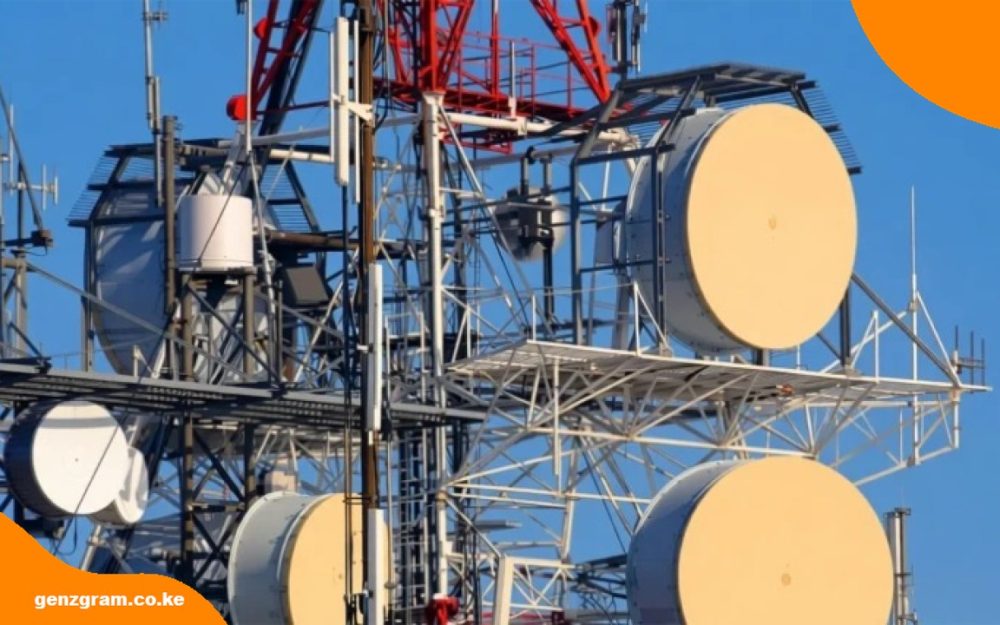
You’ve probably seen them countless times: tall towers beside the highway, on a hilltop or above the rooftops, wearing bold bands of red and white. It looks like a design choice, but it isn’t. Those stripes serve a serious purpose, and it has little to do with your phone signal.
Telecom masts and booster towers are painted red and white mainly for aviation safety. A tall, thin structure can be surprisingly hard to spot from the air, especially in poor weather, haze or low light. The bright pattern makes it stand out, so pilots can see it and steer clear.
Why red and white, and not another colour?
It comes down to contrast.
White shows up clearly against dark backgrounds like hills, forests and distant land.
Red (or sometimes orange) stands out against bright skies and clouds.
Alternating bands break up the outline of the tower, so the eye picks it out as a human-made object and not a blur against the sky.
A plain grey or green mast would blend into the background, which is the opposite of what you want near flight paths.
Which towers get painted?
Not every mast wears stripes. Aviation authorities set rules on which structures must be marked, and these usually depend on a few things:
Height: taller towers are more likely to need marking.
Location: towers near airports, airstrips, helipads or low-flying routes are the priority.
Surroundings: a mast on a high hill can effectively become even taller from a pilot’s point of view.
The exact limits differ from country to country. In Kenya, those rules are set by the aviation authorities, so a tower’s operator needs to follow them when building.
That’s why you’ll often see shorter masts, or ones tucked between city buildings, left plain or even disguised as trees. They’re not tall or exposed enough to pose the same risk.
What about at night?
Paint only works in daylight. After dark, many tall towers carry red lights, either steady or flashing, so pilots can see them. Some use bright flashing white lights in the daytime too, as an extra warning. Together with the paint, the lights give round-the-clock protection.
Does the paint affect signal?
No. The colour has nothing to do with how well the tower sends or receives signals. The antennas and equipment do that work. The stripes are only about visibility, and a tower would work just as well in any other colour.
Faded or peeling paint defeats the purpose. A mast that has gone dull and pale is much harder to see, which is why operators are expected to repaint and maintain markings and keep the warning lights working. A broken light on a tall tower is a real hazard for aircraft.
Quick FAQs
Are all telecom towers red and white?
No. Only those that need to be marked for aviation safety, based on height and location.
Is it the same everywhere?
The principle is the same worldwide, but exact colours, patterns and height thresholds vary by country.
Why do some towers look orange and white instead?
Aviation standards often allow orange as well as red, because it also contrasts well against the sky.
Do the colours attract or repel birds?
That’s not the reason for the colours. They’re meant for pilots, not wildlife.
Next time you spot a red and white tower, remember that the paint isn’t decoration. It’s a simple, effective way to help planes and helicopters see tall structures in time, and it quietly protects lives every day.