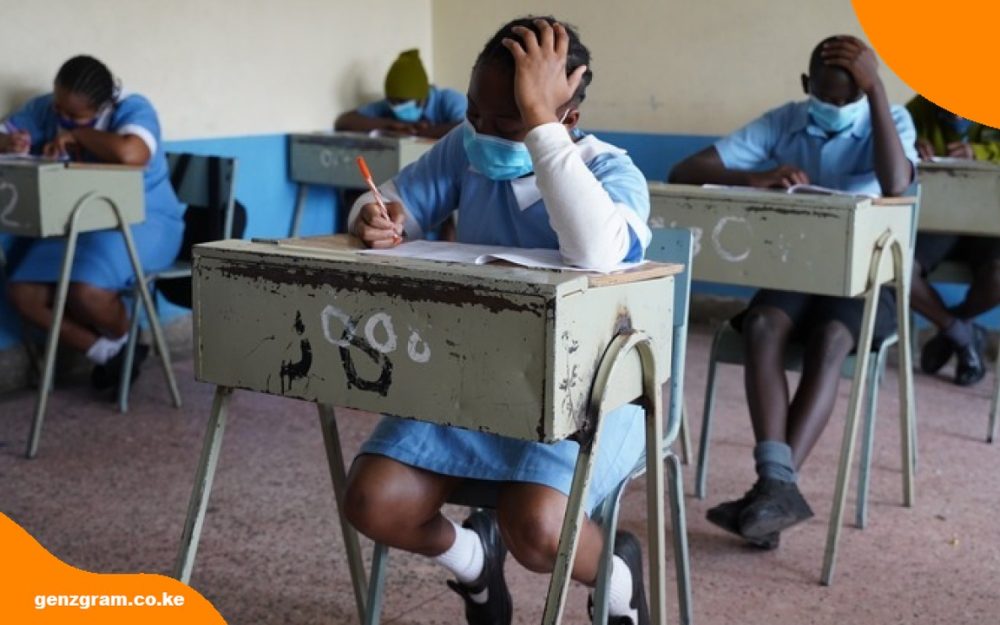
Months of revision come down to a few hours in an exam room. And according to the Kenya National Examinations Council, how you behave in that room matters almost as much as what you know. With the national exams only days away, KNEC has set out clear instructions for candidates, and ignoring even a small one could cost you.
Here’s a plain-language breakdown, so you, your child or your students can prepare calmly.
Be early, and expect to be searched
Candidates are expected to present themselves for a search outside the exam room and be at their desks at least 15 minutes before each paper begins. The first session starts at 8:00 a.m., so a late night or a long journey is a risk you can’t afford. Anyone who arrives late has to give the supervisor a valid explanation.
Bring proof of who you are, too. Candidates are only allowed into exam centres after showing proof of eligibility, such as a national ID card, birth certificate or passport.
arena
Phones and notes: leave them behind
This is the rule that catches people out. KNEC warns against having mobile phones or other electronic communication devices at exam centres. The same goes for books, notes or any paper that isn’t the question paper or an item KNEC has approved. Keep in mind that having something close to you can count, not just using it. The safest move is to leave anything questionable at home.
What you can write with, and what you can’t
Answers must be written in black or blue ink, and both ballpoint and fountain pens are allowed. If a paper allows a calculator, it must be the non-programmable type. If you need mathematical tables, only KNEC-printed ones are allowed, with no handwritten notes in them. Younger candidates have their own requirements, for example Grade 6 candidates must bring a pencil for shading their answer sheets.
Handling your answer booklet and paper
A few small habits can protect your results:
Fill in the details. Candidates must sign and write the exam date on their answer booklets.
kenyans
Check your paper first. A question paper with smudges, errors or poor printing must go straight back to the supervisor.
Do rough work in the booklet. Don’t take any paper, used or unused, out of the exam room. Rough work belongs in the official answer booklet, and if it isn’t being submitted, it should be left on the desk for the supervisor to collect.
Stop when told. When time is up, candidates must stop writing as soon as the supervisor or invigilator says so.
Watch your time. KNEC has also reminded candidates about managing time, since running out of minutes on a paper you could have passed is an avoidable loss. Skim the whole paper, plan how long each section deserves and keep a few minutes at the end to review.
The penalties are real
Exam irregularities carry consequences. The guidelines set out penalties for candidates and others involved in malpractice under the KNEC Act. For schools, the risk can be even bigger, as registering ghost candidates counts as malpractice and can lead to a school being deregistered as an exam centre.
Advice for parents and teachers
Go through this list with candidates the night before, not the morning of.
Pack the night before: ID or admission documents, two pens in the right colour, an approved calculator and a pencil if needed.
Remind candidates that a calm, well-rested mind is worth more than one more hour of cramming.
The rules aren’t there to scare anyone. They exist to keep the exam fair for everyone. Follow them, stay focused, and let your preparation do the talking. To every candidate: good luck.