
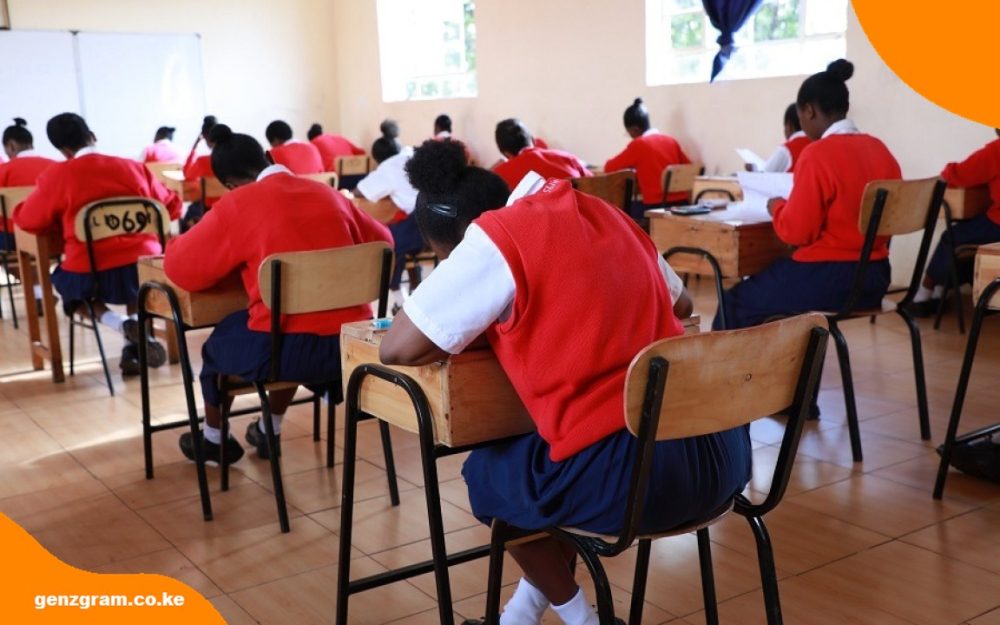
More than 2.5 million Kenyan learners have begun their 2026 national assessments, marking another important stage in the country’s transition to Competency-Based Education (CBE).
The Kenya Primary School Education Assessment (KPSEA) for Grade 6 learners and the Kenya Junior School Education Assessment (KJSEA) for Grade 9 candidates officially began on Monday, October 26, 2026, across assessment centres nationwide.
The exercise has drawn attention from parents, teachers, school administrators and education stakeholders as learners complete assessments that form part of their academic progression under Kenya’s evolving education system.
According to figures released by the Kenya National Examinations Council (KNEC), 1,380,463 candidates registered for KPSEA, while another 1,206,028 registered for KJSEA. Combined, the two assessments account for more than 2.58 million learners.
The government has assured parents that measures have been put in place to protect examination materials, prevent malpractice and support the smooth administration of the assessments.
When will the KPSEA and KJSEA assessments end?
Although both assessments began on October 26, they follow different schedules.
Grade 6 learners undertaking KPSEA are scheduled to complete their assessments on Wednesday, October 28, 2026. Grade 9 learners sitting KJSEA will continue for five days, with their assessment period ending on Friday, October 30.
The first day saw Grade 6 candidates sit Mathematics and English. Grade 9 learners, meanwhile, tackled English Language, English Composition and Literary Analysis.
On Tuesday, October 27, the timetable provides for Integrated Science and Kiswahili for Grade 6 candidates. Grade 9 learners are scheduled to undertake Kiswahili Lugha and Kiswahili Insha na Utangulizi wa Fasihi.
Wednesday’s schedule includes Creative Arts and Social Studies for Grade 6, while Grade 9 candidates are expected to sit Mathematics and Agriculture.
The assessments are generally administered during morning sessions, with the reported schedule running between 8:30 a.m. and 12:30 p.m. Parents and candidates should follow the official timetable issued by their schools and KNEC for specific paper times and any applicable arrangements.
What parents should know as assessments continue
With the exercise underway, parents and guardians have an important role in helping candidates remain calm and focused.
Education assessments can create anxiety, particularly among children who are sitting a national assessment for the first time. Parents are encouraged to offer reassurance rather than placing additional pressure on learners to achieve particular results.
Adequate rest, timely arrival at assessment centres and adherence to instructions can help learners approach their papers with confidence. Parents should also communicate with teachers and school administrators if they require clarification about schedules or candidate arrangements.
The Kenya National Examinations Council has emphasised the need for integrity throughout the assessment period. Candidates are expected to follow the rules provided by their supervisors and invigilators.
Parents should also be cautious about individuals claiming to have leaked examination papers, promising guaranteed results or requesting money in exchange for examination assistance. Any suspicious claims should be reported through appropriate official channels rather than circulated as verified information.
Government assures Kenyans of examination security
Education Cabinet Secretary Julius Ogamba has assured parents, teachers and learners that the government has taken measures to protect the integrity of the national assessments.
According to the Kenya News Agency, the measures include the use of smart electronic padlocks on examination storage containers, colour-coded assessment materials and personalised question papers designed to help protect candidates’ identities.
The government has also expanded the network of examination storage containers to improve access for examination officials and support the timely distribution of materials to assessment centres.
Ogamba said the arrangements were intended to ensure that the assessments are conducted smoothly, securely and fairly.
The security measures come amid continued public concern about examination leaks and irregularities that could undermine confidence in national assessments. Maintaining proper supervision and secure handling of materials is therefore an important part of ensuring that candidates are assessed under consistent conditions.
Why the assessments matter under Competency-Based Education
KPSEA and KJSEA form part of Kenya’s shift away from the former 8-4-4 system towards Competency-Based Education.
KPSEA assesses Grade 6 learners as they complete the primary-school stage, while KJSEA evaluates Grade 9 learners as they prepare to transition to senior school.
The new education framework places greater emphasis on learners’ competencies, skills and learning progression rather than relying exclusively on a single final examination.
For Grade 9 candidates, KJSEA is particularly significant because it forms part of the assessment process supporting their transition to senior school. The results contribute to a broader picture of a learner’s progress alongside other assessment components under the curriculum framework.
The system is designed to recognise different areas of ability and provide information that can support educational decisions as learners move through the school system.
However, the assessments also place responsibilities on schools, teachers and education authorities to ensure that learners understand the process and receive appropriate guidance.
A milestone for learners, teachers and families
The start of the 2026 KPSEA and KJSEA assessments represents a significant moment for thousands of families whose children are completing key stages of basic education.
For Grade 6 learners, the exercise marks the end of one phase of their schooling. For Grade 9 candidates, it forms part of the transition towards the next stage of secondary education.
As the assessments continue, attention will remain on the conduct of the exercise, the protection of examination materials and the support available to learners.
Parents and guardians are encouraged to obtain updates from schools and official KNEC channels rather than relying on unverified messages circulating online.
With the Grade 6 assessment period expected to end on October 28 and Grade 9 candidates continuing until October 30, the coming days will remain important for learners, teachers and examination officials across the country.
Ultimately, the success of the exercise will depend not only on secure administration but also on creating an environment in which candidates can demonstrate their abilities without unnecessary pressure or unfair interference.