
Kenya is facing renewed pressure to treat road safety as a national emergency following a series of deadly collisions along the Nairobi–Mombasa Highway that have claimed dozens of lives in recent weeks.
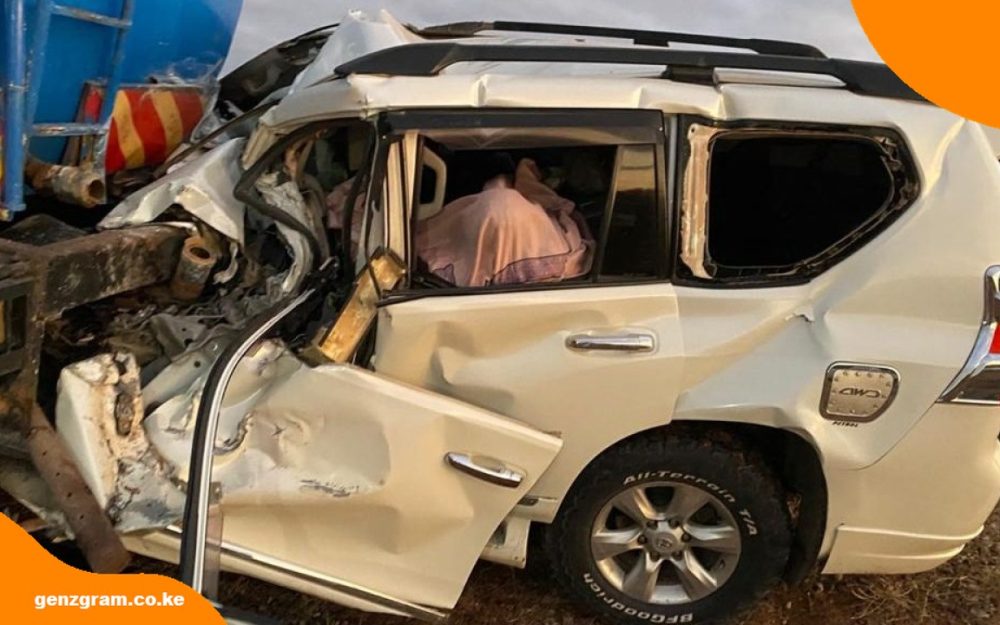
The latest tragedy occurred on Sunday, October 25, 2026, near Kanga in the Mtito Andei area of Makueni County, where a passenger bus collided with a lorry. The crash killed at least 24 people and left another 24 injured, according to the Associated Press. The victims included passengers returning from a church pastor’s funeral in western Kenya.
The incident came only weeks after another fatal crash near Salama, along the same highway, claimed 17 lives in early October.
With families mourning loved ones and survivors receiving treatment, the National Transport and Safety Authority (NTSA) has called on the government to declare road traffic crashes a national disaster. The proposal has reignited a difficult question: has road safety in Kenya reached a point where ordinary enforcement measures are no longer enough?
NTSA wants road crashes declared a national disaster
On October 25, NTSA Director-General Nashon Kondiwa said Kenya records approximately 20,000 road crashes annually, resulting in more than 5,000 deaths.
The authority argued that a national disaster declaration could help mobilise government resources, strengthen coordination between agencies and establish measurable targets for reducing fatalities and serious injuries.
The proposed approach would bring together road agencies, the National Police Service, health authorities and county governments under a more coordinated framework.
The reasoning is that road safety cannot be handled by traffic police alone. Preventing crashes requires effective enforcement, safer road infrastructure, properly maintained vehicles, responsible driving, public education and emergency medical services capable of responding quickly when collisions occur.
However, NTSA’s call is a proposal, not confirmation that the government has already declared road crashes a national disaster. The authority is asking the government to take that step.
Dangerous overtaking under renewed scrutiny
Preliminary information about the Kanga collision pointed to a possible head-on crash involving the bus and lorry, with improper overtaking suspected as a contributing factor. Investigations were still needed to establish the precise circumstances.
The suspected role of dangerous overtaking has attracted particular attention because the Salama crash earlier in October was also linked to an attempted overtaking manoeuvre.
These incidents illustrate the potentially devastating consequences of drivers attempting to pass other vehicles without sufficient visibility, space or time to return safely to their lanes.
On a busy highway carrying buses, trucks, private cars and other vehicles, one risky decision can endanger dozens of people who have no control over the manoeuvre.
Speeding, driver fatigue, distracted driving, impaired driving and failure to observe traffic rules are other recognised road-safety concerns in Kenya. The National Police Service has previously urged motorists to avoid reckless overtaking and other dangerous practices.
Still, it would be premature to attribute every crash to driver behaviour alone. Investigators must establish the facts of individual incidents, while authorities also need to examine vehicle condition, road design, visibility and other potential contributing factors.
Would a national disaster declaration make a difference?
Supporters of NTSA’s proposal argue that the declaration could elevate road safety from a transport-sector concern to a coordinated national priority.
In practical terms, such an approach could help clarify which agencies are responsible for particular interventions, improve coordination during major incidents and support the allocation of resources to areas with high crash rates.
It could also encourage stronger cooperation between the agencies responsible for roads, vehicle inspections, traffic enforcement and emergency medical care.
But a declaration alone would not prevent a speeding vehicle from causing a collision or stop a driver from attempting a dangerous overtake.
Its value would depend on what follows: clear responsibilities, adequate funding, transparent reporting, effective enforcement and measurable improvements in road safety.
Kenya already has road-safety policies and enforcement mechanisms. The challenge is ensuring that these measures are implemented consistently and that known risks are addressed before more people die.
A national disaster declaration should therefore be assessed not simply by the announcement itself, but by whether it produces meaningful changes on the ground.
Is the Nairobi–Mombasa Highway safe enough?
The repeated fatal collisions have also revived questions about the design and capacity of the Nairobi–Mombasa Highway, one of the country’s most important transport corridors.
The highway serves passenger transport, commercial freight, tourism and movement between major economic centres. Its importance means that crashes can have consequences extending beyond the victims and their families, including disrupted travel, delayed deliveries and pressure on local hospitals.
Following the recent tragedies, calls have intensified for improvements to dangerous sections, including proposals to upgrade parts of the highway to a dual carriageway.
A wider or better-designed road is not a complete solution on its own, but appropriate engineering measures can reduce certain risks. Depending on the location, these may include safer overtaking opportunities, clearer markings, improved signage, road barriers, speed management and treatment of identified accident black spots.
Authorities must also establish whether previously identified hazards have been addressed and whether road users are receiving timely warnings about dangerous sections.
The scale of the problem makes it important to consider both immediate enforcement and longer-term infrastructure investment.
Emergency response matters after a crash
Preventing collisions must remain the priority, but the response after an accident can also determine whether injured people survive.
Major highway crashes may involve several casualties at once, placing significant pressure on nearby health facilities. Ambulance availability, trained emergency personnel, communication between responders and access to appropriate treatment are therefore essential parts of road safety.
A coordinated national approach could help identify gaps in emergency response, particularly in areas far from major hospitals.
It should also support consistent collection of crash data. Authorities need reliable information on where accidents occur, which road users are most affected, the suspected causes and how long injured people wait for treatment.
Without such information, interventions risk being reactive rather than directed towards the locations and behaviours presenting the greatest danger.
Government response and accountability
Following the Kanga crash, President William Ruto expressed condolences to the affected families and directed authorities to inspect public service vehicles to ensure compliance with safety requirements. The government also announced plans to strengthen enforcement against dangerous overtaking, speeding and other traffic violations.
These measures will need sustained implementation to have a lasting effect. Vehicle inspections, for example, are most effective when they identify genuine safety defects and are followed by appropriate action against non-compliant operators.
Similarly, traffic enforcement must be predictable and impartial. Rules against speeding, reckless overtaking and unsafe vehicles offer limited protection if drivers believe violations can be committed without consequences.
Accountability should extend beyond individual motorists where evidence points to failures in vehicle maintenance, regulatory oversight, road design or emergency preparedness.
A serious national response would therefore need to identify not only what went wrong after each tragedy, but also which preventable risks could have been addressed beforehand.
The question Kenya must now confront
The call to declare road crashes a national disaster comes at a time when the consequences of road deaths are painfully visible. Families lose parents, children and breadwinners, while survivors may face lengthy recovery and financial hardship.
The latest collisions have strengthened the case for urgent action, but the effectiveness of any declaration will depend on implementation.
Kenya needs responsible driving, consistent enforcement, safer roads, properly maintained vehicles and an emergency response system that can handle major incidents. These measures must work together rather than operate as disconnected initiatives.
Whether the government formally adopts NTSA’s proposal or pursues another coordinated framework, the objective should remain the same: fewer preventable deaths and serious injuries.
Should Kenya declare road accidents a national disaster? The proposal deserves serious consideration, but the more important test will be whether the government’s response translates into safer journeys and fewer families receiving devastating news.