

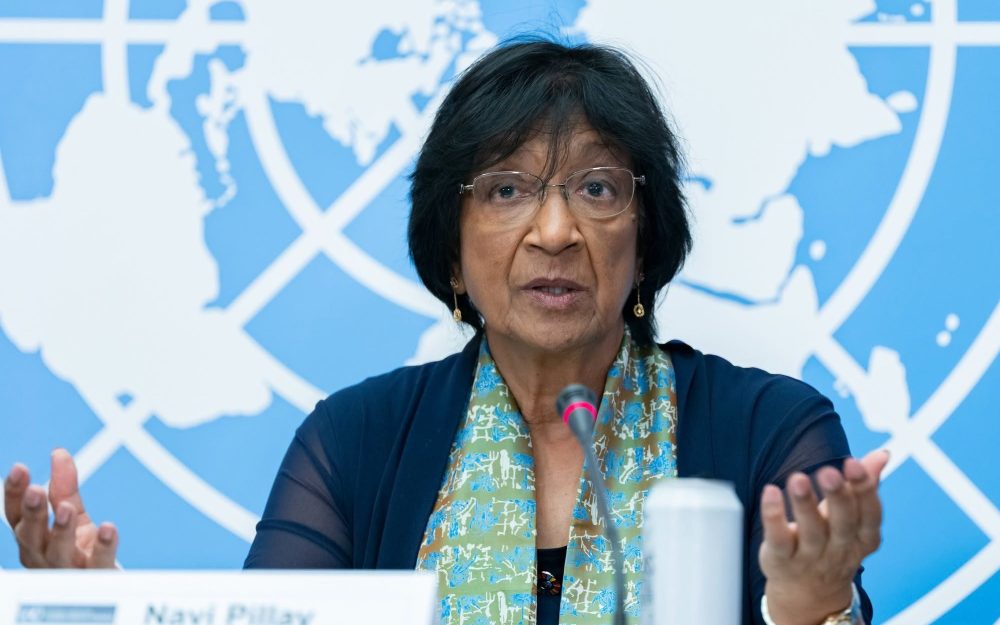
South African jurist and veteran human rights advocate Navanethem “Navi” Pillay has won the 2026 Nobel Peace Prize, earning international recognition for a career spanning the fight against apartheid, international criminal justice and efforts to hold perpetrators of grave human rights violations accountable.
The Norwegian Nobel Committee announced the award on Friday, October 9, 2026, citing Pillay’s contribution to promoting peace and international law. The committee praised her courage, integrity and role in advancing a global legal system capable of prosecuting war crimes, crimes against humanity and genocide.
The 85-year-old former United Nations High Commissioner for Human Rights has spent much of her professional life confronting abuses of power and arguing that international law must apply regardless of a person’s political influence or position.
Her recognition comes at a time when international institutions face mounting pressure over their ability to respond to armed conflicts and alleged atrocities. Her work on Gaza, in particular, has made her a prominent figure in the global debate over accountability and the interpretation of international law.
From Apartheid South Africa to International Recognition
Born in Durban, South Africa, in 1941 to a family of Indian Tamil descent, Pillay grew up under apartheid, a system of institutionalised racial segregation and discrimination that denied the Black majority and other non-white communities fundamental rights.
Her early experiences helped shape a legal career dedicated to challenging discrimination and defending people whose rights were threatened by the state.
In 1967, she established her own law practice in what was then Natal Province, becoming the first woman to open a law firm in the province. She subsequently represented political activists and people targeted under apartheid, including members of the anti-apartheid movement.
Her legal work placed her among those using the courts to challenge a system built on racial exclusion. Following the end of apartheid, she became the first woman of colour appointed to South Africa’s High Court, marking another milestone in the country’s transformation.
Her career later extended beyond South Africa, with appointments to international judicial institutions that dealt with some of the most serious crimes committed during modern conflicts.
Her Role in the Rwanda Genocide Tribunal
Pillay became a judge at the International Criminal Tribunal for Rwanda in 1995 and later served as its president from 1999 to 2003.
The tribunal was established to prosecute individuals responsible for genocide and other serious violations of international humanitarian law during the 1994 Rwandan genocide.
One of the most significant aspects of her judicial work involved recognising sexual violence as a tool of genocide. Her contribution to the tribunal’s landmark jurisprudence helped establish that rape and other forms of sexual violence could constitute acts of genocide when committed with the required intent and in the relevant circumstances.
The work was important in expanding international recognition of the experiences of victims whose suffering had often been overlooked in legal proceedings.
Pillay subsequently served as a judge at the International Criminal Court, strengthening her reputation as a jurist focused on accountability for the gravest international crimes.
From the United Nations to the Gaza Controversy
Between 2008 and 2014, Pillay served as the United Nations High Commissioner for Human Rights, becoming one of the organisation’s leading figures on the protection of fundamental freedoms and the investigation of abuses.
In later years, she chaired the UN Independent International Commission of Inquiry on the Occupied Palestinian Territory, including East Jerusalem, and Israel.
In 2025, the commission concluded that Israel had committed genocide in Gaza. Its findings drew on its assessment of events during the war, including civilian deaths, the destruction of essential infrastructure and restrictions affecting the population.
Israel strongly rejected the genocide allegation and has disputed the conclusions of UN bodies investigating its conduct. The commission’s findings should be distinguished from a final judgment by an international court establishing state responsibility for genocide.
Pillay’s involvement nevertheless placed her at the heart of one of the most consequential international legal debates surrounding the Gaza conflict. Her supporters regard the inquiry as an important attempt to document alleged atrocities and uphold international law, while critics have challenged the commission’s conclusions and impartiality.
The Nobel Committee’s announcement focused on Pillay’s wider record and efforts to promote international law, rather than solely on her work concerning Gaza.
A Nobel Prize for the Rule of Law
The 2026 award places Pillay among a distinguished group of South Africans who have received the Nobel Peace Prize, including Albert Luthuli, Desmond Tutu and Nelson Mandela.
South African President Cyril Ramaphosa congratulated Pillay, describing the recognition as a tribute to her lifelong commitment to justice, human dignity and peace.
The Nobel Committee’s decision also sends a message about the importance of legal institutions at a time when international justice mechanisms face political criticism and pressure.
Pillay’s career reflects the principle that peace involves more than ending open conflict. It also requires accountability, protection of vulnerable communities and legal avenues through which victims can seek justice.
Her path from defending anti-apartheid activists in South Africa to serving in international courts illustrates how national struggles for equality can influence the development of global human rights protections.
For many supporters, her Nobel Peace Prize is recognition of a lifetime spent confronting discrimination and insisting that serious abuses must be investigated. For critics of her work on Gaza, the award is likely to intensify existing disputes over the role of international institutions in politically charged conflicts.
What is clear is that Pillay’s recognition places international law, human rights and accountability firmly at the center of the 2026 Nobel Peace Prize discussion.
The 2026 Nobel Peace Prize recognizes Navi Pillay’s efforts to promote peace and international law, highlighting the continuing global debate over justice, human rights and accountability.