
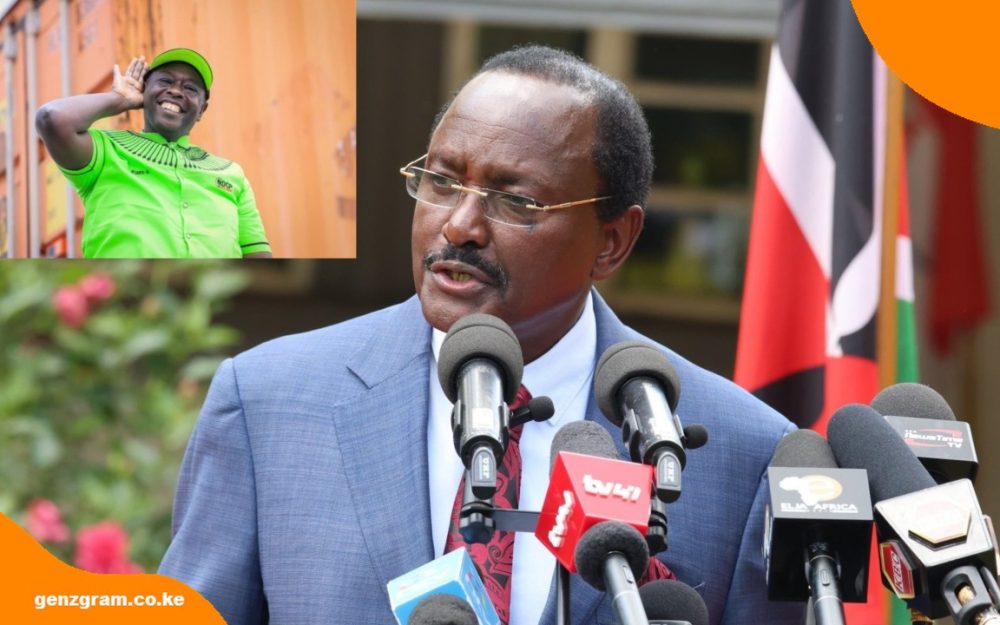
Kenya’s opposition politics has entered another important phase after Wiper Patriotic Front leader Kalonzo Musyoka met former Deputy President Rigathi Gachagua at his Wamunyoro residence in Nyeri County on Monday, October 26, 2026.
The meeting brought together two influential political figures whose cooperation could shape negotiations over the opposition’s strategy for the August 10, 2027, General Election.
The discussions come as opposition leaders seek to build a common political front capable of challenging President William Ruto, who is expected to seek another term. However, the growing calls for unity have also exposed difficult questions about leadership, political interests and the selection of a single presidential candidate.
While the Wamunyoro meeting signalled a willingness to strengthen cooperation, the opposition still faces the challenge of turning consultations into a firm political agreement.
According to reports by The Star and Daily Nation, the talks formed part of wider efforts to consolidate opposition parties and agree on a common presidential candidate.
What happened at Wamunyoro?
Gachagua hosted Kalonzo and a delegation of leaders from the Wiper camp at his rural residence in Nyeri County.
The meeting included politicians from different regions, among them Machakos Governor Wavinya Ndeti, Makueni Governor Mutula Kilonzo Junior and Kitui Senator Enoch Wambua.
The discussions followed Gachagua’s earlier engagement with Nairobi Senator Edwin Sifuna and leaders associated with the Linda Mwananchi movement. That meeting had already fuelled speculation about a possible alliance involving different opposition camps.
After the Kalonzo meeting, representatives from Wiper and the Democracy for the Citizens Party (DCP) indicated that the two parties intended to strengthen cooperation, bring their political bases together and engage other like-minded groups.
They also reiterated their support for the opposition’s broader campaign against Ruto securing another presidential term.
However, the leaders played down speculation that the Wamunyoro visit had produced a power-sharing agreement. DCP and Wiper representatives described the engagement as part of ongoing consultations rather than a concluded deal on the allocation of government positions.
This distinction matters because a political meeting, a commitment to cooperate and a formal coalition agreement are three different things.
The difficult question: Who will be the opposition candidate?
One of the biggest challenges facing the opposition is how to settle on a presidential candidate without alienating other leaders who also have national ambitions.
Kalonzo has been involved in efforts to consolidate opposition parties, while Gachagua has emerged as a central figure in a separate strand of opposition consultations. Other names in the wider conversation include Sifuna, former Cabinet Secretary Fred Matiang’i and former presidential candidate Martha Karua.
The disagreement is not simply about which individual should lead. It also concerns when the decision should be made.
A report published by Daily Nation on October 27 indicated that Kalonzo’s team favoured settling the presidential ticket as early as December 2026. Supporters of an early decision argue that the eventual candidate would have more time to mobilise supporters, organise campaign structures and build national and international networks.
Gachagua and some of his allies, however, have argued for delaying the decision until closer to the election. Their concern, as reported by the newspaper, is that an early announcement could give political opponents time to exploit dissatisfaction among leaders who fail to secure the nomination.
No final date for naming the candidate had been agreed upon in the reporting available on October 27.
The debate exposes a central dilemma for coalition politics: announcing a candidate early may provide time for preparation, but delaying the decision may help keep competing political interests together for longer.
Why a Kalonzo–Gachagua understanding could matter
Kalonzo and Gachagua have different political backgrounds and bases of support. Bringing their parties into a more coordinated arrangement could widen the opposition’s reach across different regions.
Kalonzo has long been an established national political figure and leads Wiper. Gachagua, the former Deputy President, leads DCP and has remained an important figure in opposition realignments following his departure from government.
If their cooperation develops into a formal arrangement, it could provide a framework for negotiations with other parties and political movements.
A broader coalition could also create opportunities to coordinate campaign messaging, mobilise supporters and negotiate a common policy agenda.
But regional representation alone does not automatically translate into a winning national coalition. The partners would still need to agree on leadership, campaign priorities, party structures and how to manage disagreements after nominations.
They would also need to demonstrate that their cooperation extends beyond meetings among senior politicians and has support among the voters they hope to represent.
The political significance of the Wamunyoro talks therefore depends on what the leaders do next, rather than the meeting itself.
The Sifuna factor and other opposition interests
The Kalonzo–Gachagua discussions are unfolding alongside other efforts to shape the opposition’s presidential ticket.
Gachagua recently met Sifuna and leaders associated with Linda Mwananchi. Gachagua has also indicated publicly that he would be willing to support Sifuna for president, or serve as his deputy, if opposition leaders agreed that Sifuna was best placed to lead the campaign.
Those remarks add another dimension to the negotiations. The opposition is not dealing with a straightforward choice between only Kalonzo and Gachagua; several political figures and groups are seeking a place in the emerging arrangement.
The leaders must therefore determine whether their interests can be accommodated through a shared ticket, agreed coalition structures or another negotiated formula.
The challenge is to reach an arrangement that participants will respect even if they do not get their preferred positions.
Previous Kenyan elections have demonstrated the importance of coalition negotiations. The National Rainbow Coalition, which brought together opposition leaders ahead of the 2002 election, provides a historical example of parties overcoming differences to contest an election under a common banner.
However, every election has its own circumstances. The experience of previous coalitions does not guarantee that current negotiations will produce the same outcome.
What does this mean for William Ruto?
The opposition’s attempt to coordinate its political activities presents a challenge to Ruto’s re-election campaign, but the size of that challenge will depend on whether the talks lead to a credible and organised coalition.
A divided opposition may struggle to coordinate its campaign, while a united one could pool resources, broaden its reach and present voters with a more consolidated alternative.
Nevertheless, it would be premature to conclude that the Wamunyoro meeting has already changed the balance of the 2027 race. The opposition has yet to resolve the presidential ticket question, formalise all its proposed partnerships and demonstrate how its coalition would operate during the campaign.
Ruto’s political prospects cannot be determined from one meeting or a series of alliance announcements alone. Voter priorities, party mobilisation, candidate selection, campaign organisation and developments over the coming months will all form part of the wider electoral contest.
The most immediate development is that opposition leaders are continuing to negotiate rather than proceeding entirely through separate political strategies.
What happens next?
The coming weeks are likely to be important as the opposition determines how to formalise its cooperation and when to announce its presidential candidate.
The leaders must settle the timetable for selecting the flagbearer, establish a process that participating parties consider acceptable and decide how to accommodate those who may not receive the positions they seek.
They must also agree on a common political message and explain what their proposed administration would do on issues affecting Kenyans, including the cost of living, employment, public services and economic opportunity.
Ultimately, the Wamunyoro meeting is a significant step in the ongoing negotiations, but it is not the final outcome.
Could Kalonzo and Gachagua change Kenya’s 2027 political race? Their cooperation could help shape the opposition’s strategy, but its eventual impact will depend on whether the leaders can turn their commitment to unity into a formal, functioning alliance with an agreed candidate and a programme that resonates with voters.
For now, the opposition has moved another step towards cooperation. The harder task is deciding who will lead, when that decision will be made and whether all the participating political camps will accept the outcome.