

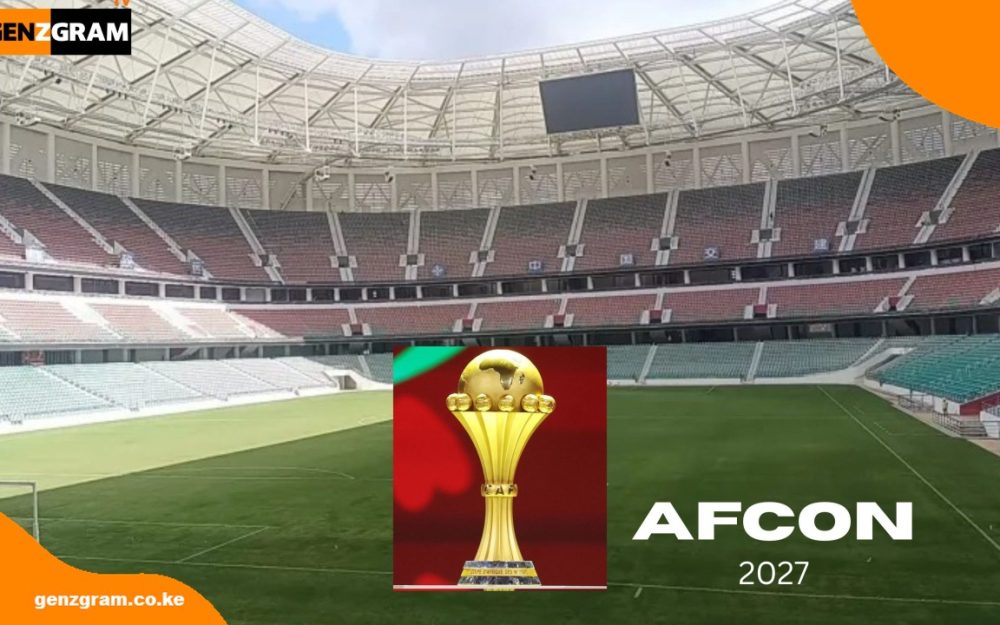
East Africa is preparing for one of the biggest sporting events in its history, but the countdown to the 2027 Africa Cup of Nations is putting Kenya, Uganda and Tanzania under increasing pressure to deliver the infrastructure required for the continental tournament.
Scheduled for June 19 to July 17, 2027, AFCON 2027 will be the first edition jointly hosted by three countries. The tournament offers an opportunity to showcase East Africa to millions of football fans, attract visitors and stimulate business. However, the success of the regional hosting arrangement will depend on whether the three countries can turn construction projects and promises into fully operational facilities before the opening match.
Why AFCON 2027 preparations are under pressure
The Confederation of African Football (CAF) has already conducted inspections across the three host nations, examining stadiums, training grounds, hotels, airports, transport arrangements and other supporting infrastructure.
The inspections are important because hosting AFCON involves much more than having a large stadium ready for the opening ceremony. Facilities must meet the required standards for players, spectators, officials, broadcasters, security personnel and medical teams.
CAF President Patrice Motsepe has called for greater urgency from the co-hosts while expressing confidence that the tournament can proceed as scheduled. He has acknowledged the remaining challenges and emphasised the need to accelerate preparations.
With fewer than nine months remaining as of October 2026, the coming months will be critical. Construction must be completed early enough to allow inspections, technical testing and the correction of any outstanding problems.
Kenya: Talanta Stadium is a major test
Kenya’s preparations are centred partly on the new 60,000-seat Talanta Sports International Stadium in Nairobi, also known as Raila Amolo Odinga International Stadium.
The project is expected to play a central role in Kenya’s hosting plans. A report published by the Kenyan Parliament on October 1 placed construction progress at approximately 94 per cent, while noting that important technical, accessibility and operational matters still required attention.
These include arrangements for spectator movement, traffic management and connections to surrounding roads. Officials were targeting full readiness by December, followed by two to three months of testing specialist systems before the stadium is used for the competition
Other venues also matter. Kenya must ensure that existing stadiums and training grounds are ready, while providing sufficient accommodation, transport, power, security and broadcasting facilities.
Talanta’s completion would represent a major milestone, but it cannot independently guarantee that the entire Kenyan tournament operation will be ready.
Uganda: new stadiums and training grounds face deadlines
Uganda is working towards completing its main venues, including Hoima City Stadium, Mandela National Stadium and Akii-Bua Olympic Stadium in Lira.
According to Uganda’s Local Organising Committee, the three stadiums were targeted for readiness by the end of December 2026. The country also planned to complete 10 of its 12 designated training facilities by that deadline, with the remaining two expected by the end of January 2027.
These deadlines leave limited room for delays. Training facilities are particularly important because teams require suitable pitches and supporting amenities throughout the tournament, not only on match days.
Uganda’s progress will therefore be measured not just by the completion of its main stadiums, but also by whether training grounds and the supporting systems are ready for use and meet CAF’s requirements.
Tanzania: progress must extend beyond stadiums
Tanzania is also working to complete its venues and prepare the wider infrastructure needed to host teams and fans.
In an interview published by Al Jazeera on October 1, the country’s AFCON 2027 Local Organising Committee chief executive, Neema Msitha, said stadium construction was more than 80 per cent complete on average, while training facilities were approximately 75 per cent complete.
The figures indicated progress, but also showed that further work remained. Tanzania’s preparations include improvements to roads, accommodation and transport arrangements alongside stadium and training-ground construction.
For Tanzania, as with its co-hosts, the final test will be whether construction deadlines are met and the facilities can operate together as part of a coordinated tournament.
The real challenge: making everything work together
A successful AFCON requires a connected system of infrastructure and services. Stadiums must be accessible, pitches must be suitable for competition, and teams must be able to travel between hotels, training grounds and match venues without unnecessary disruption.
Security, emergency medical services, immigration, electricity, telecommunications, broadcasting and crowd management must also be coordinated across the host countries.
The three governments have recognised these needs in their joint planning. Their preparations cover infrastructure, hospitality, safety and security, media and broadcasting, the movement of supporters, governance and finance.
Co-hosting offers an advantage by sharing the responsibilities and potential economic benefits across three countries. It also introduces a coordination challenge: each host must meet its own obligations while working within a common tournament schedule.
The experience of jointly hosting the 2024 African Nations Championship gives the region a foundation to build on. However, AFCON involves 24 national teams and requires a larger operational effort, meaning that previous experience cannot replace the need for thorough preparation.
What is at stake for East Africa?
AFCON 2027 could bring increased tourism, business opportunities, employment and international attention to Kenya, Uganda and Tanzania. Hotels, transport operators, restaurants, traders and other businesses may benefit from the arrival of supporters and officials.
The infrastructure developed for the tournament could also support future sporting events and other uses if it is properly maintained and managed.
But delays or operational shortcomings could affect the experience of visiting teams and fans, as well as the reputation of the region as a host of major international competitions. That is why construction quality, safety, accessibility and long-term planning matter as much as meeting deadlines.
So, will East Africa be ready?
As of October 24, 2026, it is too early to give a definitive answer. There is evidence of substantial progress, including the advanced construction of Talanta Stadium and reported completion targets for Uganda’s principal venues. At the same time, CAF and the host countries still face important deadlines involving training facilities, stadium testing and supporting infrastructure.
The decisive period will be the months between now and the first half of 2027. Meeting construction targets will be essential, but the facilities must also pass inspections and demonstrate that they can safely support a month-long continental tournament.
For East Africa, AFCON 2027 is more than a football competition. It is a regional test of planning, infrastructure delivery and cooperation.
Will Kenya, Uganda and Tanzania be ready when the first match kicks off on June 19, 2027, or will the remaining work prove too much for the deadline?